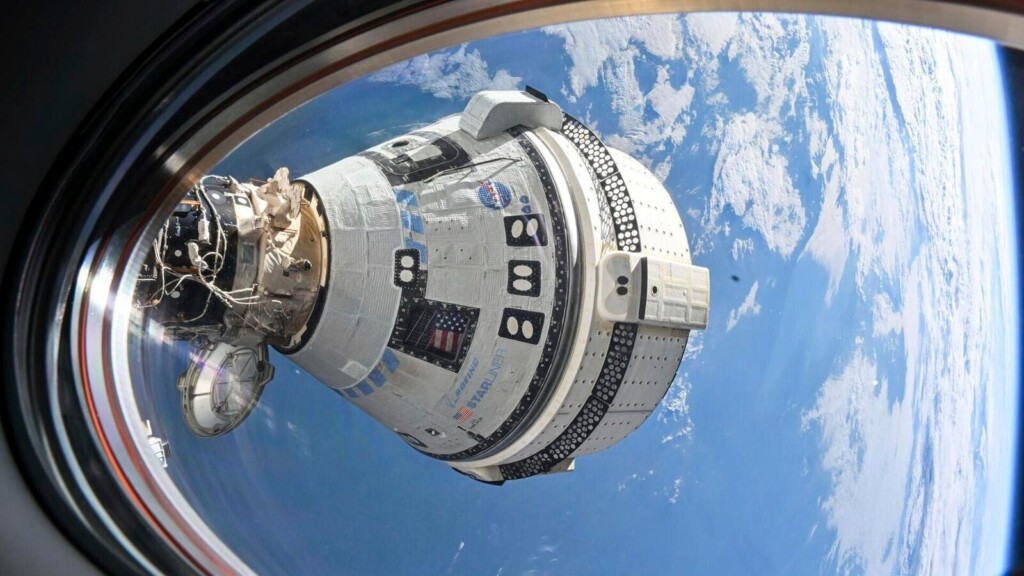
Boeing silent amid Starliner rift speculation, but NASA hopeful of its commitment: What we know so far
The relationship between NASA and Boeing faces its most public test in years following the troubled first crewed flight of the Starliner spacecraft. What began as a milestone mission for American commercial spaceflight has evolved into a case study in risk management, institutional communication, and the fragile dynamics of public-private partnerships in the space sector. As Boeing maintains an unusual public silence, NASA officials walk a careful line between acknowledging serious technical disagreements and projecting confidence in a partnership that underpins multiple flagship programmes.
Mission timeline and the decision to return uncrewed
Starliner's Calypso capsule launched on 5 June 2024 carrying NASA astronauts Sunita Williams and Butch Wilmore, docking at the International Space Station the following day. The mission was originally planned for roughly eight days, but helium leaks and thruster performance anomalies detected during approach to the station triggered an extended review. After weeks of ground testing and data analysis, NASA announced on 24 August that Starliner would return to Earth without its crew, with Williams and Wilmore remaining aboard the station until a SpaceX Dragon capsule brings them home in February 2025 — a stay of approximately eight months instead of eight days.
The uncrewed return was executed successfully on 6-7 September, with Starliner landing at White Sands Space Harbor in New Mexico. NASA characterised the landing as a validation of the spacecraft's autonomous entry, descent and landing systems, but the preceding decision exposed deep divisions in risk assessment between the agency and its contractor.
Absence from the post-landing briefing
Boeing's last public appearance in a Starliner briefing was on 25 July. When NASA held the post-landing news conference at Johnson Space Center on 7 September, two chairs designated for Boeing representatives were removed from the dais shortly before the event began, according to Ars Technica senior editor Eric Berger, who was present. A NASA public advisory had listed Boeing Commercial Crew Programme vice-president Mark Nappi and another official as scheduled participants.
Instead of attending, Nappi issued a brief statement on Boeing's website acknowledging the successful landing and committing to a data review to determine next steps for the programme. The company has not responded to media enquiries about the speculation surrounding its relationship with NASA or the change in public visibility.
NASA acknowledges 'difference of opinions'
Steve Stich, manager of NASA's Commercial Crew Programme, confirmed during a 4 September press conference that the agency and Boeing held fundamentally different views on the risk posed by the thruster anomalies. Boeing's modelling predicted acceptable thruster degradation for the remainder of the flight, but NASA's team could not reach the same level of confidence given the uncertainties.
"The teams were very split… and [due to the] uncertainty relative to the thruster… the NASA team chose to return Butch and Suni on [SpaceX] Dragon," Stich said. When asked whether discussions had become heated or approached a shouting match, he declined that characterisation but acknowledged "some tension in the room" given the magnitude of the decision.
Dana Weigel, manager of the International Space Station programme, offered insight into Boeing's perspective, noting the company sits "in a bit of a different position in terms of our understanding about the risks and what's available to us without Starliner."
NASA leadership projects partnership continuity
Joel Montalbano, deputy associate administrator of NASA's Space Operations Mission Directorate, addressed Boeing's absence directly at the 7 September briefing. He stated that Boeing had been consulted beforehand and "deferred to NASA to represent the mission." Montalbano added that Boeing managers congratulated the NASA team in the control room after landing and emphasised: "Boeing is committed to continue to work with us."
Montalbano underscored Boeing's critical role across three major NASA programmes: the International Space Station, Commercial Crew, and the Space Launch System. "Their work is critical for the success of all three programmes," he said, signalling that the agency views the partnership as structurally indispensable despite the current friction.
Astronaut perspective: both sides 'on board' with changes
Butch Wilmore, speaking to media after the landing decision, said both NASA and Boeing are "onboard" with the changes needed to return Starliner to operational status. "We have lessons learnt that we will go through. We will have discussions" with both organisations regarding necessary changes, he said. "When you have issues like those we had, there are some changes that need to be made… Boeing's on board with that. We are all on board with that."
Commercial and programmatic stakes
The Starliner episode carries implications beyond a single mission. NASA's Commercial Crew Programme was designed around redundant US crew transport capabilities — SpaceX's Dragon and Boeing's Starliner — to avoid reliance on a single provider or on Russia's Soyuz. With Dragon currently the only operational US crew vehicle, schedule pressure on Starliner's certification has intensified.
Boeing's fixed-price contract for Starliner development has already absorbed over $1.5 billion in charges against earnings since 2019. The company's defence and space division faces broader challenges, including 737 MAX production issues and defence programme overruns. NASA's public commitment to the partnership may reflect limited near-term alternatives as much as confidence in Boeing's technical trajectory.
For procurement and supply-chain stakeholders, the episode highlights how fixed-price commercial contracts shift technical risk to contractors while leaving agencies with residual mission-assurance risk — a dynamic that will shape future tenders for lunar landers, orbital logistics, and Mars transit systems.
What this means
The Starliner episode reveals the inherent tension in NASA's commercial partnership model: agencies demand rigorous safety margins while contractors manage fixed-price exposure and reputational risk. Boeing's silence may reflect legal caution, internal restructuring, or genuine frustration with NASA's risk posture — but the programmatic reality is that neither side can easily walk away. NASA needs a second certified crew vehicle; Boeing needs Starliner to validate its commercial space strategy. The coming months will test whether the "lessons learnt" process Wilmore described can translate technical disagreement into a stronger, more transparent partnership — or whether the rift widens into a structural threat to US crew transport redundancy. For stakeholders watching commercial space procurement, the episode is a reminder that contract structures alone cannot resolve fundamental differences in risk culture; sustained alignment requires governance mechanisms that survive first contact with flight anomalies.
Originally reported by livemint.com. Adapted for our readers with AI assistance.
Author of the article: Published Sep 18, 2026 11 minute read Article content Kyndryl Canada has been engaged to deliver a commercialization strategy and…
The National Agency for Science and Engineering Infrastructure (NASENI) on Friday 4th September 2026, marked three years of institutional transformation under its Executive Vice…
Municipal Administration Minister P. Narayana speaks to residents after laying the foundation stone for the slum redevelopment project at Velampeta, near Lakshmi Nagar in…