
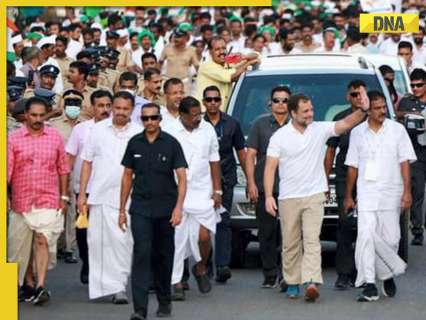
The political dynamics of India have witnessed significant shifts, especially since 2014. Leader of Opposition Rahul Gandhi recently made a striking claim regarding the Bharat Jodo Yatra, stating that it was a political necessity rather than a mere strategic choice. In his detailed discourse, Gandhi highlighted how traditional democratic instruments failed, compelling the Congress party to connect directly with the Indian populace. This article explores his statements, the context behind the Yatra, and its implications for Indian democracy and opposition politics.
The Changing Landscape of Indian Politics Since 2014
Rahul Gandhi pointedly remarked that 2014 marked a turning point in Indian politics. The entry of Narendra Modi as Prime Minister initiated a phase characterized by aggressive political strategies that, according to Gandhi, challenged the very foundations of democratic institutions. This era has been marked by heightened political polarization and a shift in how opposition voices are treated.
Gandhi emphasized that the political environment post-2014 was unprecedented, with increased attacks on democratic structures including the media, judiciary, and independent agencies. This new phase, he suggests, has made political engagement more challenging, demanding innovative approaches from opposition parties.
The Leader of Opposition acknowledged the personal impact of this shift, stating that the evolving political climate not only transformed the country's political discourse but also changed him personally. This admission underscores the intensity and seriousness with which Gandhi views the current political scenario.
Democratic Institutions Under Strain: The Need for Direct Engagement
Rahul Gandhi's assertion that 'all the instruments that normally work in a democracy were not working' highlights a perceived breakdown in the functioning of essential democratic institutions. He cited the media, courts, and other agencies as being ineffective or compromised in their roles of maintaining democratic balance.
This perceived institutional failure left the opposition with limited avenues to voice dissent or connect with the public. Gandhi explained that under such circumstances, conventional democratic processes were insufficient to counter the prevailing political environment.
Consequently, the Congress leadership decided that direct engagement with the people was the only viable strategy. This led to the conceptualization and execution of the Bharat Jodo Yatra and the Nyay Yatra as grassroots movements designed to bypass institutional bottlenecks.
The Genesis of Bharat Jodo Yatra: A Political Necessity
Rahul Gandhi revealed that the Bharat Jodo Yatra was not merely a political strategy but a forced necessity due to the suppression of democratic channels. The Yatra emerged as a tool to reconnect with the Indian populace directly, circumventing controlled or biased media and institutions.
He described the Yatra as a response to a political environment where opposition parties faced systematic challenges, including media suppression and institutional control. The Yatra symbolized a reclaiming of democratic space through people-centric engagement.
The march, spanning from Kanyakumari to Kashmir, covered approximately 4,000 kilometers on foot, representing not just a physical journey but a symbolic unification of diverse Indian communities and voices. Gandhi's personal involvement underscored his commitment to reviving democratic dialogue.
Personal Reflections: Gandhi’s Journey from Skeptic to Participant
Interestingly, Rahul Gandhi admitted that before 2014, the idea of undertaking such a massive foot march across India would have seemed laughable to him. However, given the political realities post-2014, he embraced the Yatra as the sole effective method for opposition outreach.
This personal transformation highlights Gandhi's adaptability and willingness to engage with grassroots politics in an unprecedented manner. His journey from skepticism to active participation reflects a broader shift in opposition strategies under challenging circumstances.
Gandhi also expressed that beyond political necessity, he harbored a personal desire to undertake such a journey since his youth, to understand India intimately. The Yatra thus fulfilled both a political and personal aspiration, blending leadership with grassroots connection.
The Dual Yatras: Bharat Jodo and Nyay Yatra Explained
Apart from the Bharat Jodo Yatra, Rahul Gandhi also mentioned the Nyay Yatra, which was conducted differently yet shared the same objective of direct public engagement. While Bharat Jodo was a foot march, the Nyay Yatra was carried out by car, traversing from Manipur to Maharashtra.
The Nyay Yatra focused on regions affected by social and political unrest, such as Manipur, highlighting the Congress party’s attempt to address diverse regional issues through direct interaction. Both Yatras were designed to bridge the gap created by institutional failures.
Together, these marches symbolized a comprehensive strategy to revitalize opposition politics by connecting with citizens across geographical and cultural divides, emphasizing inclusivity and democratic participation.
Impact and Reception of Bharat Jodo Yatra
The Bharat Jodo Yatra received widespread attention for its scale and symbolism. Rahul Gandhi claimed that the Yatra 'worked beautifully' in reconnecting with Indians, suggesting that grassroots engagement remains a potent political tool despite institutional challenges.
The march energized Congress cadres and supporters, fostering a sense of unity and purpose. It also sparked conversations nationwide about the state of democracy and the role of opposition in safeguarding democratic values.
Critics and supporters alike acknowledged the Yatra's significance, though opinions varied on its long-term political impact. Nonetheless, the Yatra reinvigorated political discourse and placed the Congress party back in the spotlight as a people-centric force.
Challenges Faced During the Yatras
Executing a 4,000-kilometer foot march across diverse terrains and political landscapes posed logistical and security challenges. Rahul Gandhi and his team had to navigate complex regional dynamics, varying public sentiments, and administrative hurdles.
Moreover, the political environment's hostility, as described by Gandhi, meant facing opposition from rival parties and sometimes hostile media coverage. Despite these challenges, the Yatra maintained its focus on peaceful, inclusive engagement.
The personal toll on Gandhi and participants was notable, involving physical exhaustion and intense public scrutiny. However, these challenges underscored the commitment of the Congress leadership to revive democratic engagement through direct contact with citizens.
Future Implications for Indian Democracy and Opposition Politics
Rahul Gandhi’s statements and the Bharat Jodo Yatra reflect broader concerns about the health of Indian democracy. The perceived weakening of democratic institutions necessitates innovative approaches for opposition parties to remain relevant and effective.
The Yatra model could inspire future political mobilizations emphasizing direct people engagement, transparency, and grassroots activism. It also raises questions about the role of traditional democratic institutions and the need for their reinvigoration.
For the Congress party, the Yatra represents a strategic pivot towards reconnecting with voters and rebuilding trust. Its success or failure could shape opposition strategies in upcoming elections and influence India's democratic trajectory.
Conclusion
Rahul Gandhi’s candid remarks about the Bharat Jodo Yatra reveal a critical perspective on the current state of Indian democracy and the strategies opposition parties must adopt to navigate it. The Yatra stands as a testament to the resilience and adaptability of political leadership in the face of institutional challenges. As India continues to grapple with evolving political dynamics, such grassroots movements may play a pivotal role in restoring democratic vibrancy and ensuring that the voices of its diverse populace are heard. The journey from Kanyakumari to Kashmir is not just a physical trek but a symbolic path toward reclaiming democratic engagement and political inclusivity.