
Politics
How Minnesota Figures Into the Presidential Politics of Insulin Prices
Politics tamfitronics Minnesota Gov. Tim Walz attends a rally in Asheville, North Carolina, on Sept. 17. Minnesota led the way on in...
TAMFIS NIG LTDRC 8067447CAC ACTIVEFinima, Bonny Island, Rivers State

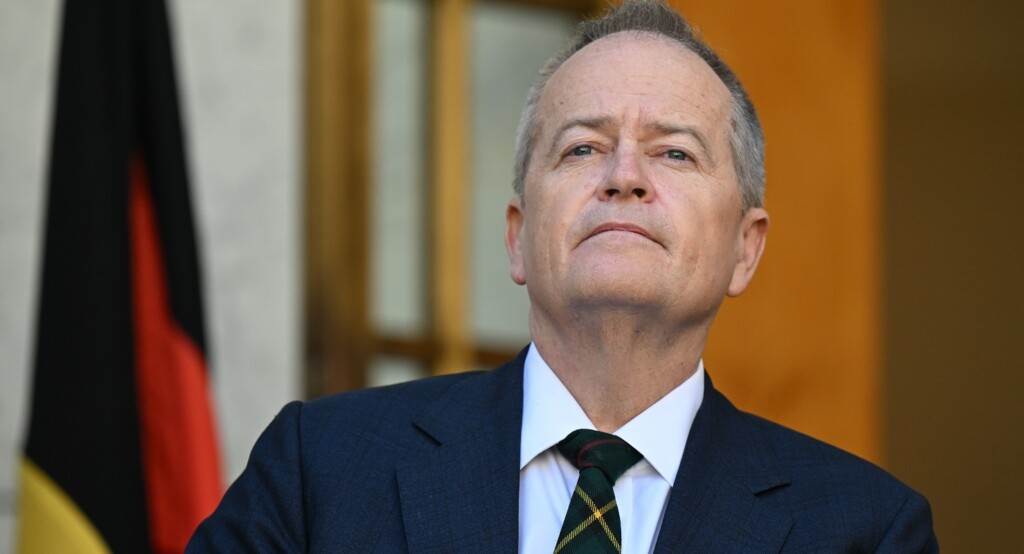
Bill Shorten’s departure from federal politics in February 2025 marks the end of a significant era in Australian public life. Elected in 2007 amid considerable promise as a future leader, Shorten’s journey was defined not by electoral triumph but by persistent advocacy for structural reform. Despite two unsuccessful bids for the prime ministership and a reputation complicated by internal party manoeuvring, his legislative contributions — especially in financial regulation and disability support — have endured beyond his time in office. For consumers, businesses, and policymakers observing market fairness and social investment, Shorten’s legacy offers instructive lessons in how determined policy work can yield lasting change, even in the face of political setbacks.
As Parliamentary Secretary and later Minister under the Rudd and Gillard governments, Bill Shorten played a central role in advancing the Future of Financial Advice (FOFA) reforms, which aimed to curb conflicts of interest in the wealth management sector. Introduced in 2012, FOFA banned conflicted remuneration for financial advisors, prohibited misleading conduct, and required advisers to act in the best interests of their clients — a direct response to widespread concerns about commissions driving unsuitable product recommendations.
The reforms were met with fierce resistance from major banks, financial planning groups, and Coalition politicians, who argued they would increase costs and reduce access to advice. Nevertheless, FOFA passed parliament and became a cornerstone of Australia’s financial regulatory framework. Although later criticised by some for potentially raising advice fees, its core intent — to protect consumers from exploitative practices — was vindicated by the findings of the banking royal commission, which revealed systemic misconduct across major institutions.
Shorten’s persistence in pushing FOFA through a hostile Senate and amid intense industry lobbying demonstrated a commitment to market integrity that resonated with consumer advocates. For ordinary Australians saving for retirement or seeking investment guidance, the reforms represented a step toward greater transparency and accountability in financial services — principles that remain relevant amid ongoing debates about advice affordability and quality.
While the full impact of FOFA continues to be evaluated, its survival despite repeated attempts to weaken or repeal it underscores its institutional entrenchment. In an era where trust in financial institutions remains fragile, Shorten’s role in establishing baseline conduct standards offers a reference point for future reforms aimed at balancing accessibility with ethical practice.
If any single achievement defines Bill Shorten’s legacy, it is his foundational role in the creation and implementation of the National Disability Insurance Scheme (NDIS). As a parliamentary secretary in the Rudd government, Shorten helped elevate disability rights onto the national agenda, advocating for a system that would move beyond welfare-based support toward individualised, lifelong care.
Under Julia Gillard, he oversaw critical design phases of the NDIS, working to build consensus across jurisdictions and stakeholder groups. When Labor returned to office in 2022, Shorten assumed responsibility for managing the scheme as Minister for the NDIS, a role in which he sought to address growing concerns about cost escalation and operational efficiency without undermining the program’s core principles.
His recent reforms — developed through protracted negotiations with state and territory governments — have focused on introducing greater fiscal discipline, improving fraud detection, and streamlining access processes. While these changes have drawn criticism from some disability advocates who fear they may restrict eligibility or reduce support levels, Shorten maintains that sustainable growth is essential to preserve the scheme’s integrity over the long term.
The NDIS now supports over 600,000 Australians with permanent and significant disabilities, providing funding for therapies, equipment, and personal care. Though its rapid expansion initially strained budgets, the scheme has become a permanent fixture of Australia’s social safety net. Shorten’s unique position — as both a key originator and a later reformer — gives him a distinctive credibility in shaping its evolution, even as opinions differ on the best path forward.
Shorten’s parliamentary career was marked by resilience in the face of adversity. He survived the Abbott government’s trade union royal commission inquiry, which sought to undermine his credibility through allegations of improper union conduct — a challenge he navigated without lasting damage to his standing within the Labor Party. His 2016 campaign, notable for its aggressive targeting of Malcolm Turnbull over the alleged privatisation of Medicare, demonstrated a strategic willingness to engage in hard-hitting political contestation, even as it drew criticism for its tactics.
Despite losing the 2019 federal election — a result many considered unthinkable given polling and economic conditions — Shorten retained strong loyalty from his caucus, a contrast to his earlier tumultuous relationships with Kevin Rudd and Julia Gillard. This loyalty underscored a shift in how colleagues perceived him: not merely as a factional operator, but as a leader capable of uniting the party around a reformist agenda.
His policy platform in 2019, which included proposals to limit negative gearing to new housing and reform franking credits, was dismissed by much of the mainstream media as politically toxic. Yet, years later, similar measures have re-entered public debate as housing affordability and tax equity remain pressing concerns. Shorten’s willingness to advocate for economically sound but politically risky reforms reflects a belief in the long-term value of evidence-based policy, even when it fails to win immediate electoral reward.
In this sense, Shorten’s career mirrors that of other reform-oriented leaders who, like John Hewson before him, are remembered not for winning office but for shifting the terms of national conversation. His legacy lies not in ministerial titles held, but in the durability of the ideas he advanced — ideas that continue to influence how Australia approaches financial fairness and social inclusion.
Bill Shorten did not become Prime Minister, but his influence on Australian public life extends far beyond the office he never held. Through determined advocacy for fairer financial advice and the creation of a transformative disability support scheme, he left a legacy that continues to shape how Australians access essential services and protect themselves from exploitation. While his political journey included setbacks and controversies, the endurance of his key reforms suggests that meaningful change is possible even without electoral victory. For shoppers navigating financial products, families relying on disability support, and policymakers seeking models of persistent reform, Shorten’s career offers a reminder that substantive progress often begins not with triumph, but with the courage to pursue good policy — even when it is politically inconvenient.
Originally reported by crikey.com.au. Adapted for our readers with AI assistance.
Keep reading
Politics
Politics tamfitronics Minnesota Gov. Tim Walz attends a rally in Asheville, North Carolina, on Sept. 17. Minnesota led the way on in...
Politics
Deji Adeyanju; Niger State Mining Victims Human rights lawyer and activist, Deji Adeyanju, has accepted his appointment as a member of the Federal Government’s…
Politics
Democracy, Featured, Global, Global Governance, Headlines, International Justice, IPS UN: Inside the Glasshouse, TerraViva United Nations UNITED NATIONS, Sep 11 2026 (IPS) – When…
TAMFIS NIG LTD
Electrical and instrumentation engineering, bid preparation and consulting, IT and software.