
Science & Technology
MAX Power Engages Global Technology Leader Kyndryl to Build Commercialization Strategy for MAXX LEMI
Author of the article:
TAMFIS NIG LTDRC 8067447CAC ACTIVEFinima, Bonny Island, Rivers State

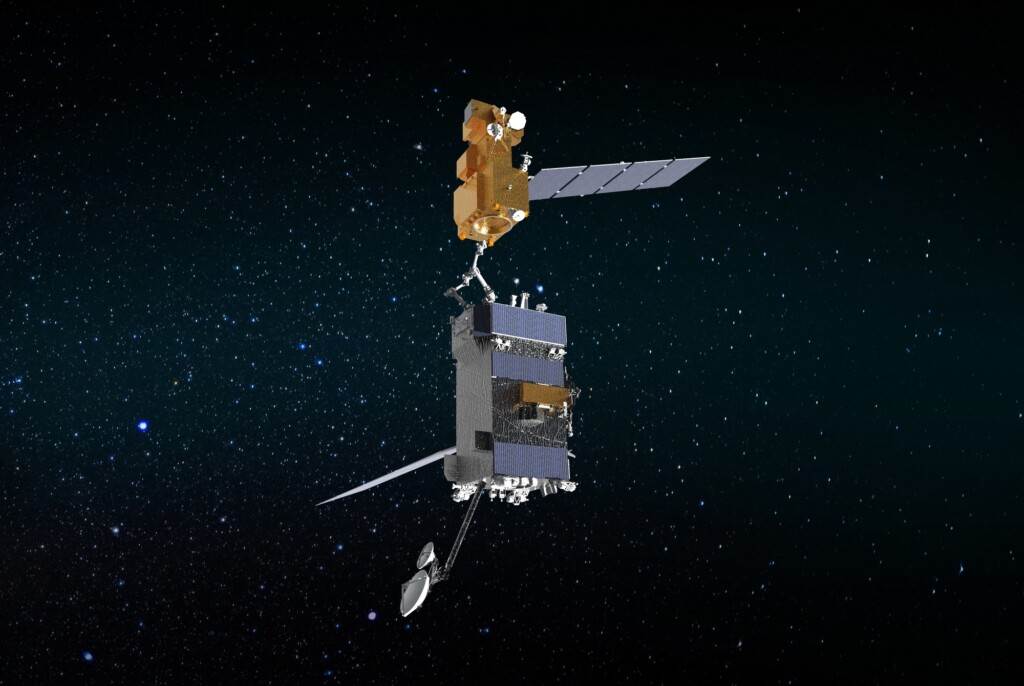
NASA’s OSAM-1 mission, a pioneering effort aimed at advancing in-space servicing, assembly, and manufacturing technologies, has been officially canceled after years of developmental challenges. Originally launched as Restore-L, the mission sought to demonstrate satellite refueling, in-space assembly, and manufacturing capabilities, but escalating costs and persistent delays have led to an agency-wide decision to terminate the project by the end of fiscal year 2024. This article offers a detailed exploration of NASA’s reaffirmed cancellation decision, analyzing its background, the factors influencing the choice, implications for the aerospace industry, and the future of in-space servicing technology development.
The OSAM-1 mission began its journey over a decade ago under the name Restore-L, with the primary goal of refueling the Landsat 7 satellite in low Earth orbit. This marked a groundbreaking attempt to extend satellite lifespans through in-space servicing technologies. Over time, the mission’s scope expanded to include in-space assembly and manufacturing tasks, such as assembling a Ka-band antenna, prompting a rebranding to OSAM-1 in 2020.
Initially, the mission was scheduled to launch in 2020 with a budget estimate ranging between $626 million and $753 million. However, technical hurdles and development complexities led to multiple delays and cost escalations. These challenges pushed back the launch timeline and increased the projected cost to over $2 billion, raising significant concerns within NASA and among stakeholders.
As the mission evolved, NASA’s objectives also broadened to demonstrate new capabilities that could revolutionize satellite maintenance and construction in orbit. Despite these ambitious goals, the project faced persistent setbacks that ultimately called into question its feasibility and return on investment.
NASA’s reaffirmation to cancel OSAM-1 primarily hinges on three critical factors: cost overruns, schedule delays, and technical risks. The mission’s budget ballooned to nearly three times its original estimate, while the launch date slipped from 2020 to a tentative 2026, undermining confidence in its timely completion.
An independent review highlighted these issues, emphasizing the high probability of further schedule slippage and escalating costs if development continued. The review concluded that the risks associated with pursuing the 2026 launch plan were substantial and that the mission’s technological advancements might not deliver an adequate return on investment.
Moreover, NASA leadership considered the uncertain pathway for integrating OSAM-1 technologies into the commercial space sector. The agency also weighed the broader impact on other technology development projects, deciding that continuing OSAM-1 would divert resources from potentially more viable initiatives within NASA’s portfolio.
The cancellation of OSAM-1 affects a significant workforce, with approximately 450 employees and contractors, mainly at NASA’s Goddard Space Flight Center, directly involved in the project. This decision could lead to job losses or reassignment, impacting both NASA personnel and contractors tied to the mission.
Companies like Intuitive Machines, which partnered with KBR under the Omnibus Multidiscipline Engineering Services (OMES) III contract at Goddard and contributed to OSAM-1’s development, face potential setbacks. Intuitive Machines had helped restructure the mission’s plan for a 2026 launch, viewing it as a positive step before NASA’s final cancellation decision.
The broader aerospace industry may also feel reverberations, as OSAM-1 represented a key demonstration of in-space servicing technologies that could have catalyzed commercial satellite servicing markets. The mission’s termination could slow momentum in this emerging sector, although some companies continue to pursue similar capabilities independently.
NASA’s cancellation decision still requires Congressional approval, with legislative bodies showing mixed reactions. The Senate appropriations bill for fiscal year 2025 allocated up to $174.5 million for OSAM-1, while the House version did not specify funding for the mission. Both chambers conditioned continued support on the development of a feasible completion plan.
This split indicates ongoing debate about the mission’s viability and NASA’s strategic priorities. Congressional funding decisions will play a crucial role in either facilitating a revised OSAM-1 approach or fully winding down the project and reallocating resources elsewhere.
NASA’s leadership remains engaged with Congress to communicate the rationale behind the cancellation, emphasizing the importance of focusing on more achievable and cost-effective space technology initiatives. The agency’s budgetary and programmatic decisions will continue to be scrutinized in this context.
Despite OSAM-1’s cancellation, NASA remains committed to advancing in-space servicing, assembly, and manufacturing (ISAM) technologies. The agency continues to support industry-led initiatives and research consortia such as COSMIC, which focus on developing innovative ISAM capabilities.
NASA has also partnered with organizations like DARPA to provide expertise for other robotic servicing programs, including the Robotic Servicing of Geosynchronous Satellites project. These collaborations signal NASA’s strategic intent to foster technology development through external partnerships rather than solely in-house missions.
Looking ahead, NASA plans to issue requests for information to explore new partnership opportunities, aiming to leverage private sector innovation and reduce risk. This approach aligns with broader trends in space exploration, where public-private collaborations are increasingly pivotal.
OSAM-1’s ambitious technical objectives presented significant engineering challenges. Refueling a satellite in orbit required developing complex robotic systems capable of precise maneuvering and fluid transfer in microgravity, which proved more difficult than initially anticipated.
In-space assembly and manufacturing added layers of complexity, demanding new payload designs and integration techniques. For example, assembling a Ka-band antenna in orbit involved pioneering robotic construction methods that had limited precedence, leading to iterative redesigns and testing delays.
These technical hurdles contributed to the mission’s schedule slippage and cost increases. Overcoming such challenges would have required substantial additional investment and time, factors that ultimately influenced NASA’s decision to cease the project.
The OSAM-1 cancellation directly impacts hundreds of employees and contractors, particularly at NASA’s Goddard Space Flight Center, which has been the mission’s lead center. Job security concerns and workforce adjustments are expected as the mission winds down by the fiscal year’s end.
NASA has committed to supporting affected personnel through the transition period, but the long-term effects on individual careers and local economies tied to space industry contracts remain uncertain. Contractors like Intuitive Machines face the challenge of pivoting to other projects to sustain revenue streams.
This situation underscores the broader risks associated with large-scale, high-cost space missions, where delays and cancellations can disrupt established workforce and industrial ecosystems. It also highlights the need for adaptable strategies to manage talent and contracts in a rapidly evolving space sector.
NASA’s cancellation of OSAM-1 reflects a strategic pivot toward more sustainable and cost-effective technology development approaches. The agency is prioritizing projects with clearer paths to deployment and commercial integration, reducing exposure to high-risk, long-duration endeavors.
Lessons from OSAM-1’s challenges emphasize the importance of realistic budgeting, risk management, and flexible program planning in complex aerospace missions. NASA’s experience will inform future initiatives to avoid similar pitfalls and optimize resource allocation.
The agency’s renewed focus on partnerships and modular technology development indicates a shift toward leveraging industry innovation and accelerating technology infusion. This approach aims to maintain leadership in space technology while managing costs and timelines more effectively.
The cancellation of NASA’s OSAM-1 mission marks a significant moment in the evolution of space technology development. While the mission’s ambitious goals to pioneer in-space servicing, assembly, and manufacturing remain highly relevant, practical challenges related to cost, schedule, and technical risk necessitated a course correction. NASA’s reaffirmed decision underscores the agency’s commitment to responsible stewardship of resources and strategic prioritization. Moving forward, NASA aims to foster innovation through partnerships and more focused initiatives, ensuring that the promise of in-space servicing technologies continues to advance in a sustainable and impactful manner. As the space sector adapts, the lessons learned from OSAM-1 will serve as valuable guideposts for future endeavors.
Originally reported by spacenews.com. Adapted for our readers.
Keep reading
Science & Technology
Author of the article:
Science & Technology
The National Agency for Science and Engineering Infrastructure (NASENI) on Friday 4th September 2026, marked three year...
Science & Technology
In a significant move towards urban renewal, the Andhra Pradesh government has launched a ₹40 crore slum...
TAMFIS NIG LTD
Electrical and instrumentation engineering, bid preparation and consulting, IT and software.