Top Stories
Discovery beneath soccer field reveals massive medieval convent lost for centuries
NEWYou can now listen to Fox News articles! Researchers recently uncovered a long-lost medieval convent in an unusual location in Denmark: a soccer field…
TAMFIS NIG LTDRC 8067447CAC ACTIVEFinima, Bonny Island, Rivers State

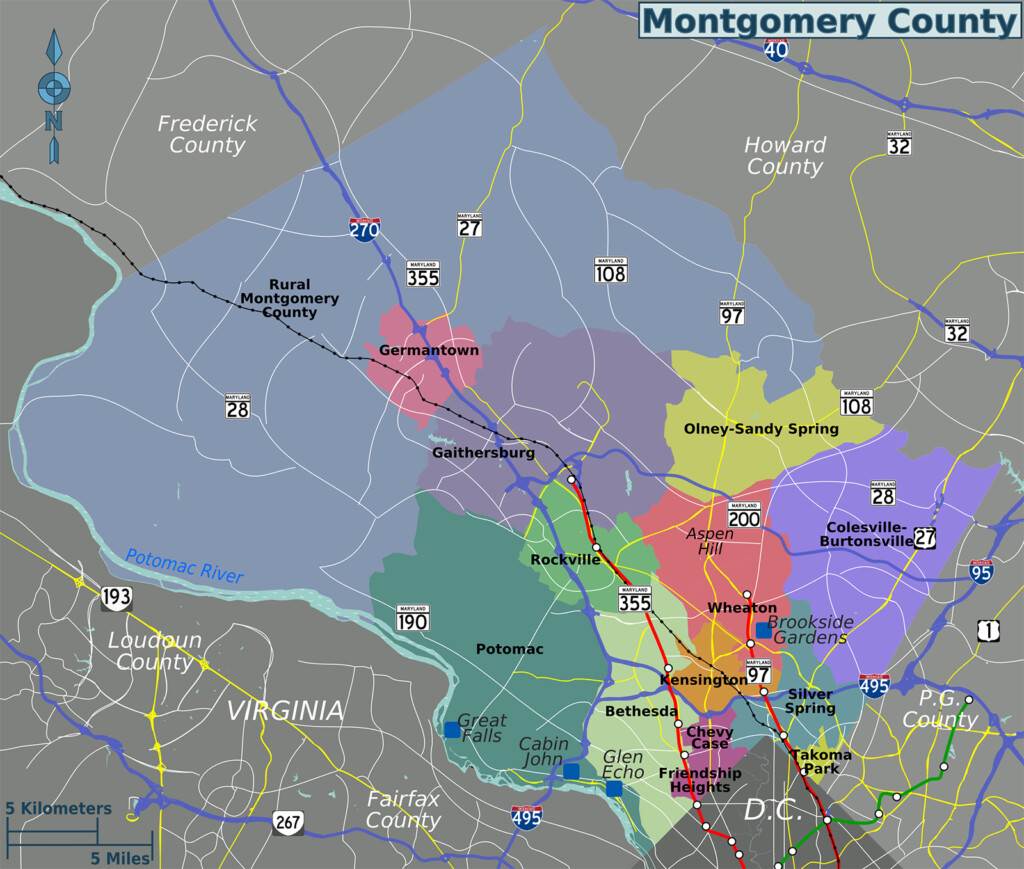
Montgomery County, Maryland, a thriving Washington suburb, was recognized in 2023 as the most religiously diverse county in the United States according to the Public Religion Research Institute (PRRI). This distinction highlights the county’s unique blend of faith traditions, ethnicities, and cultural backgrounds. With a population exceeding one million, Montgomery County exemplifies how diversity can flourish in a wealthy, educated, and politically engaged community. This article delves into the underlying factors contributing to this religious pluralism, the demographic and socio-economic context, the variety of faiths practiced, and the broader implications for the county and the nation.
Religious diversity measures the representation and balance of various faith groups within a population. The Public Religion Research Institute’s (PRRI) Census of American Religion analyzes 18 distinct religious affiliations and racial groups to calculate diversity scores. A score of 1 indicates perfect equality among religious groups, while 0 reflects complete homogeneity. Montgomery County achieved an impressive diversity score of 0.886 in 2023, making it the most religiously varied county in the country.
In previous years, counties like Brooklyn and Queens in New York City ranked higher, but Montgomery County’s rapid demographic changes and influx of various religious communities propelled it to the top spot. This change illustrates how suburban areas near major metropolitan centers are becoming increasingly diverse, not only ethnically and culturally but also in religious composition.
The county’s religious diversity is not just about numbers; it reflects a dynamic community where multiple faith traditions coexist and interact. This environment fosters interfaith dialogue and cultural exchange, enriching the social fabric and promoting mutual understanding among residents.
Montgomery County’s population exceeds one million residents, characterized by high educational attainment and significant economic prosperity. Approximately one in six adults holds a bachelor’s degree or higher, and the median household income stands at $118,323, well above the national average. This affluence supports a vibrant community with access to quality education, healthcare, and cultural amenities.
The county’s political landscape leans heavily Democratic, with 78.6% of voters supporting Joe Biden in the 2020 presidential election. This political orientation aligns with the county’s progressive stance on social issues, including religious freedom and diversity.
Linguistic diversity is also notable: only 56.8% of residents speak English at home. Spanish is spoken by 17.2%, while other Indo-European languages and Asian and Pacific Island languages account for 10.3% and 9.8%, respectively. This multilingual environment reflects a broad immigrant presence, contributing to the county’s rich cultural and religious mosaic.
Christianity remains the largest religious affiliation in Montgomery County, encompassing about 60% of the population. The Christian community is diverse, including Black Protestants (10%), white mainline or non-evangelical Protestants (9.6%), Hispanic Catholics (7.7%), white Catholics (7.4%), Hispanic Protestants (6.9%), and white evangelical Protestants (5.4%). This spectrum reflects a wide range of cultural and theological traditions within Christianity.
The religiously unaffiliated population constitutes nearly 18%, representing individuals who identify as atheist, agnostic, or having no particular religious affiliation. This group’s size aligns with national trends of growing secularism, especially in educated, urbanized areas.
Montgomery County also boasts significant minority religious communities, including Orthodox Christians, Hindus, Jews, Muslims, Buddhists, and Unitarian Universalists. Each of these groups contributes unique cultural practices and religious observances, enriching the county’s spiritual landscape.
Montgomery County ranks among the top U.S. counties for concentrations of several minority religious groups. Orthodox Christians make up about 2% of the population, the second-highest concentration nationally. Hindus represent 2.7%, the third-highest, while Jews account for 9.3%, ranking fourth in the country. Muslims comprise 3.2%, also the fourth-highest concentration nationally.
Buddhists and Unitarian Universalists, though smaller in number, maintain a visible presence with 2.7% and 1.3% of the population, respectively. These communities operate places of worship, cultural centers, and educational institutions, which serve as hubs for religious and social activities.
The presence of Washington Adventist University and Adventist HealthCare highlights the significance of the Seventh-day Adventist community, which, while not separately categorized in PRRI’s data, plays an influential role in the county’s religious and healthcare landscape.
Despite its harmonious reputation, Montgomery County has faced religious tensions, particularly in relation to educational content addressing LGBTQ+ topics. In 2023, Muslim, Catholic, and Orthodox Christian parents challenged the public school system’s decision to prohibit opting out of lessons featuring books with LGBTQ+ characters. This legal dispute involved various community organizations, including Moms for Liberty and the Council on American-Islamic Relations.
The controversy underscores the complex interplay between religious beliefs, educational policies, and civil rights in a diverse community. While the county promotes inclusivity, varying interpretations of religious doctrine sometimes lead to conflicts over public school curricula and parental rights.
Court rulings on these disputes have highlighted the delicate balance required to respect religious freedoms while ensuring equitable and inclusive education. These challenges demonstrate that religious diversity, while a strength, also requires ongoing dialogue and understanding.
Montgomery County hosts a concentration of federal institutions, including the National Institutes of Health, the U.S. Food and Drug Administration, Walter Reed Military Medical Center, and the Army Institute of Research. These agencies attract a diverse workforce from across the country and around the world, contributing to the county’s cosmopolitan character.
The presence of these institutions also influences the county’s socioeconomic profile, with many residents employed in government, healthcare, research, and technology sectors. This professional diversity complements the religious and cultural pluralism, fostering a community that is both intellectually vibrant and spiritually varied.
Additionally, notable figures such as Supreme Court Justice Brett Kavanaugh reside in the county, reflecting its prominence and influence within national legal and political spheres.
Montgomery County’s religious diversity enriches community life by promoting cultural exchange, mutual respect, and interfaith cooperation. Events, festivals, and dialogues involving multiple faith communities foster social cohesion and offer opportunities for learning and collaboration.
This pluralism also presents opportunities for local leaders to develop policies that accommodate diverse religious needs, such as holiday observances, dietary laws, and places of worship. Schools, workplaces, and public institutions adapt to serve a multifaceted population, setting examples for other regions.
Furthermore, the county’s model of religious diversity offers insights into managing diversity in other suburban areas nationwide, highlighting how demographic shifts can transform community identities and social dynamics positively.
Montgomery County, Maryland’s distinction as the most religiously diverse county in the United States in 2023 reflects a broader narrative of demographic change and cultural integration. Its rich tapestry of faith communities, supported by a well-educated and economically robust population, creates a dynamic environment where diversity is both celebrated and navigated with care. While challenges remain, particularly regarding religious beliefs and public policies, the county exemplifies how pluralism can thrive in modern suburban America. As other regions observe Montgomery County’s experience, it offers valuable lessons on fostering inclusivity, respecting religious freedom, and building resilient communities grounded in mutual respect and understanding.
Originally reported by religionnews.com. Adapted for our readers.
Keep reading
Top Stories
NEWYou can now listen to Fox News articles! Researchers recently uncovered a long-lost medieval convent in an unusual location in Denmark: a soccer field…
News
By Engr. Tamunofiniarisa BrownReading Time: 6 Minutes The conflict between Russia and Ukraine is often framed in the media as a simple battle between…
TAMFIS NIG LTD
Electrical and instrumentation engineering, bid preparation and consulting, IT and software.