
Science & Technology
MAX Power Engages Global Technology Leader Kyndryl to Build Commercialization Strategy for MAXX LEMI
Author of the article:
TAMFIS NIG LTDRC 8067447CAC ACTIVEFinima, Bonny Island, Rivers State

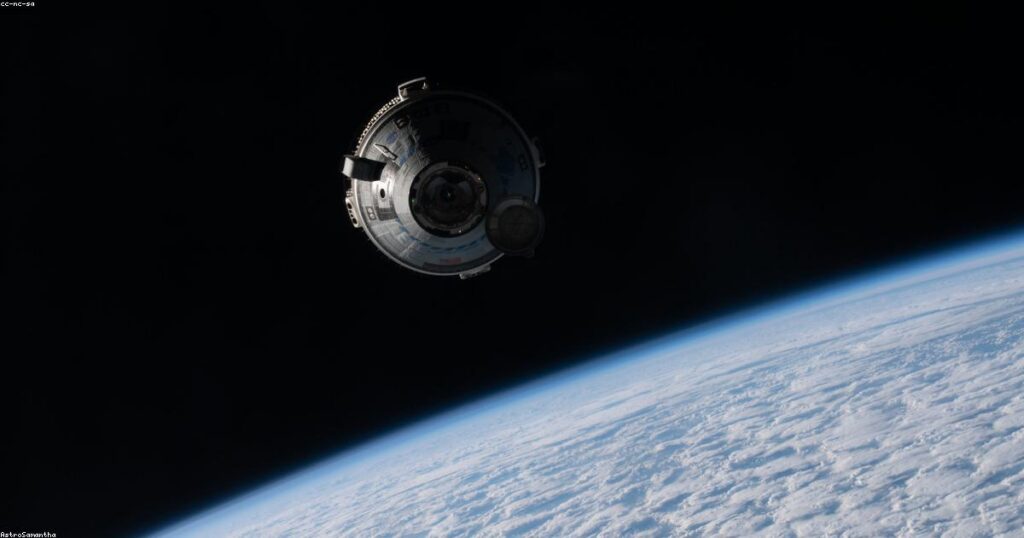
NASA's collaboration with Boeing to develop the CST-100 Starliner spacecraft represents a significant step toward expanding commercial crew transportation capabilities to the International Space Station (ISS). After an uncrewed test flight encountered propulsion system anomalies, NASA conducted an extensive review before approving the spacecraft’s undocking and return. Scheduled for no earlier than September 6, the Starliner's return marks a crucial milestone in validating Boeing’s spacecraft readiness. This article delves into the mission overview, technical hurdles, operational procedures, and implications for upcoming crewed missions, providing a comprehensive understanding of the Starliner’s journey and NASA’s approach to ensuring astronaut safety.
The Boeing CST-100 Starliner is a commercial spacecraft designed to ferry astronauts and cargo to the International Space Station under NASA’s Commercial Crew Program. The uncrewed Orbital Flight Test (OFT) mission serves as a critical validation of the spacecraft’s systems and operational capabilities before crewed flights commence.
NASA’s oversight and collaboration with Boeing ensure rigorous safety standards are maintained. The agency’s recent decision to proceed with the Starliner’s undocking after a detailed review highlights the cautious approach taken to address any anomalies encountered during flight.
The mission aims to demonstrate Starliner’s ability to autonomously dock with the ISS, perform orbital adjustments, and safely return to Earth. This test flight is essential for building confidence in Boeing’s spacecraft as a reliable means of transportation for NASA astronauts.
Shortly after launch, the Starliner experienced propulsion system issues that raised concerns about the spacecraft’s ability to perform a safe crewed return. These glitches involved the capsule’s thrusters, which are critical for maneuvering and re-entry procedures.
The propulsion anomalies were significant enough that NASA deemed them too risky to allow astronauts aboard for the return trip. Instead, NASA opted to use a SpaceX Crew Dragon vehicle for returning the astronauts who flew to the ISS on the Starliner’s June mission.
Despite these challenges, the Starliner spacecraft continued its mission, successfully docking with the ISS and completing other operational objectives. The uncrewed nature of the flight allowed engineers to remotely troubleshoot and monitor the spacecraft’s systems without endangering crew.
Following the propulsion system issues, NASA conducted an extensive review involving Boeing engineers, mission controllers, and safety experts. This process included analyzing telemetry data, assessing system redundancies, and simulating potential failure scenarios.
The review concluded that despite the earlier glitches, the spacecraft’s systems had stabilized sufficiently to allow a safe undocking and return. NASA emphasized that the decision was made with astronaut safety as the paramount consideration.
NASA announced that the earliest possible undocking date would be September 6, providing ample time for final preparations and system checks. The agency’s transparency in communicating the decision process underscores its commitment to mission safety and public accountability.
The Starliner’s return journey begins with an autonomous undocking from the ISS, a complex sequence involving precise timing and coordination with ground teams. The spacecraft will be remotely guided through orbital maneuvers to position itself for re-entry.
Re-entry will involve the spacecraft entering Earth’s atmosphere at high velocity, relying on its heat shield to withstand extreme temperatures. Following atmospheric deceleration, parachutes will deploy to slow the capsule for a safe, controlled landing.
The planned landing site is White Sands Space Harbor in New Mexico, a location chosen for its favorable weather conditions and recovery infrastructure. Ground crews will be on standby to secure the spacecraft and assist in post-landing operations.
A successful uncrewed return is a vital step toward certifying the Starliner for crewed missions. It demonstrates the spacecraft’s capability to safely complete the entire mission cycle, including launch, docking, undocking, and landing.
This milestone contributes to NASA’s goal of having multiple reliable commercial crew transportation options, reducing dependence on a single provider and enhancing resilience for ISS operations.
For Boeing, the mission’s success is crucial to restoring confidence following earlier setbacks. It validates the engineering improvements made to the Starliner and supports the timeline for forthcoming crewed flights planned in collaboration with NASA.
While both Boeing’s Starliner and SpaceX’s Crew Dragon serve the same purpose of transporting astronauts to the ISS, they differ in design, technology, and operational history. Crew Dragon has already completed multiple successful crewed missions, establishing a track record of reliability.
Starliner’s design emphasizes reusability and compatibility with existing launch infrastructure, using the Atlas V rocket for launch. In contrast, Crew Dragon launches on SpaceX’s Falcon 9 and features a fully autonomous docking system.
NASA’s decision to employ Crew Dragon for astronaut return following Starliner’s propulsion issues reflects a pragmatic approach to mission safety, leveraging the strengths of both spacecraft to ensure continuous crew rotation to the ISS.
Looking ahead, Boeing plans to address all identified issues from the uncrewed test flight to prepare for the upcoming crewed missions. These missions will further test life support systems, crew interfaces, and emergency procedures.
Continued collaboration with NASA and adherence to stringent safety protocols will be critical as Boeing works to achieve certification for regular crewed flights. Success will enable Boeing to become a key player in commercial spaceflight.
The Starliner program’s progress also supports broader NASA objectives, including expanding human presence in low Earth orbit and developing capabilities for future deep space exploration.
The Starliner’s mission and return represent a significant chapter in the evolution of NASA’s Commercial Crew Program, which aims to foster private-sector innovation in space transportation.
Successful demonstration of Starliner’s capabilities will encourage competition and collaboration among commercial providers, potentially driving down costs and accelerating technological advancements.
Moreover, reliable commercial crew vehicles contribute to the sustainability of ISS operations and pave the way for future partnerships in space exploration, including lunar missions and beyond.
Boeing’s uncrewed Starliner spacecraft is on track for a safe return to Earth by late next week, marking a pivotal moment in the Commercial Crew Program. Despite initial propulsion system challenges, NASA’s thorough review and cautious approach highlight the agency’s unwavering commitment to astronaut safety. The successful undocking and landing will validate Boeing’s engineering efforts and pave the way for future crewed missions to the ISS. As NASA and Boeing continue to collaborate closely, the Starliner’s progress promises to enhance the United States’ capabilities in human spaceflight, fostering innovation and competition in the burgeoning commercial space industry.
Originally reported by timeslive.co.za. Adapted for our readers.
Keep reading
Science & Technology
Author of the article:
Science & Technology
The National Agency for Science and Engineering Infrastructure (NASENI) on Friday 4th September 2026, marked three year...
Science & Technology
In a significant move towards urban renewal, the Andhra Pradesh government has launched a ₹40 crore slum...
TAMFIS NIG LTD
Electrical and instrumentation engineering, bid preparation and consulting, IT and software.