Top Stories
Discovery beneath soccer field reveals massive medieval convent lost for centuries
NEWYou can now listen to Fox News articles! Researchers recently uncovered a long-lost medieval convent in an unusual location in Denmark: a soccer field…
TAMFIS NIG LTDRC 8067447CAC ACTIVEFinima, Bonny Island, Rivers State

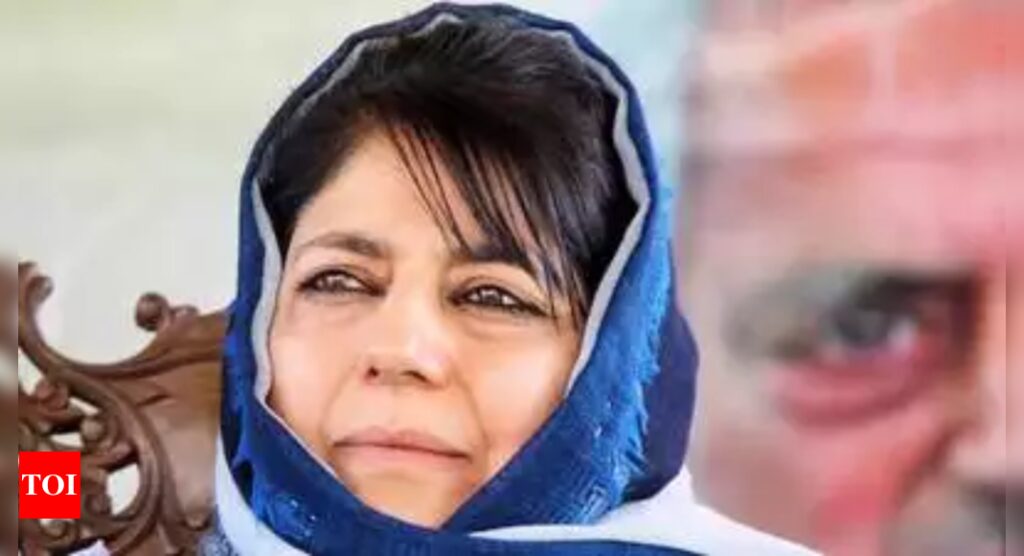
Mehbooba Mufti, the president of the Jammu and Kashmir People's Democratic Party (PDP) and former Chief Minister of the region, recently declared that she will not be contesting the forthcoming assembly elections in Jammu and Kashmir. Her decision has sparked considerable discussion across political circles, as it reflects the complex realities and challenges currently faced by regional parties in the union territory. Mehbooba Mufti underscored the constraints of the present political setup, expressing doubts about the feasibility of implementing the PDP’s agenda even if she were to assume office again. This article delves into the multifaceted reasons behind her choice, the state of political alliances, and the prospects for Jammu and Kashmir’s future governance.
Mehbooba Mufti has been a prominent figure in Jammu and Kashmir politics for over two decades. She took over the mantle of the People's Democratic Party (PDP) from her father, Mufti Mohammad Sayeed, and served as the Chief Minister of Jammu and Kashmir, notably heading a coalition government with the Bharatiya Janata Party (BJP) from 2016 to 2018. During her tenure, she attempted to navigate a complex political landscape marked by unrest, security challenges, and demands for autonomy.
Her government was noted for several initiatives, including efforts to initiate dialogue with separatist groups and attempts to foster peace through ceasefire agreements. Mehbooba Mufti’s leadership emphasized addressing long-standing grievances in the region, balancing law and order with political outreach. However, the alliance with the BJP was controversial and ultimately short-lived, reflecting the inherent tensions in governing Jammu and Kashmir.
Over the years, Mehbooba has established herself as a leader committed to the PDP’s agenda, which includes the restoration of Article 370, revocation of the Armed Forces Special Powers Act (AFSPA), and the promotion of dialogue with Pakistan and local stakeholders. Her decision not to contest the upcoming elections marks a significant moment in her political career and the region’s evolving political dynamics.
Mehbooba Mufti’s announcement that she will not participate in the upcoming Jammu and Kashmir assembly elections stems from a realistic assessment of the current political environment. She highlighted that even if she were to become Chief Minister again, the prevailing circumstances would severely limit her ability to implement her party’s agenda. The political space for meaningful governance and dialogue has reportedly shrunk since her previous tenure.
She drew attention to the contrast between her earlier government’s actions and the present scenario, citing examples such as the revocation of FIRs against thousands of individuals in 2016, the initiation of ceasefire agreements, and efforts to engage separatist leaders in talks. Mehbooba questioned whether such initiatives would be possible under the existing administrative framework and political climate, implying that the autonomy and authority required to govern effectively are lacking.
Furthermore, Mehbooba expressed skepticism about the efficacy of contesting elections under the union territory setup, where the Lieutenant Governor wields significant power. She suggested that without the ability to reverse decisions like FIRs or conduct genuine political reconciliation, holding office would be largely symbolic and ineffective in achieving the PDP’s core objectives.
The revocation of Article 370 in August 2019 transformed Jammu and Kashmir from a state into a union territory, fundamentally altering its governance structure. This change significantly curtailed the region’s autonomy, placing it under greater central government control. The new administrative setup has introduced challenges for local political parties, including the PDP, in asserting their agendas and responding to public aspirations.
Mehbooba Mufti’s decision is deeply intertwined with this altered political landscape. The union territory status limits the powers of elected representatives, with the Lieutenant Governor exercising substantial authority over administrative and security matters. This shift has prompted debates about the effectiveness of electoral participation under such constraints and whether meaningful political engagement can occur without restored autonomy.
Moreover, the reorganization has intensified political polarization, with major parties like the National Conference and the PDP reassessing their strategies. The central question remains whether electoral politics under the union territory framework can lead to substantive changes or if it primarily serves to legitimize existing power structures.
Mehbooba Mufti’s stance contrasts notably with that of other prominent regional leaders, such as Omar Abdullah, the vice president of the National Conference. Previously opposed to contesting elections under the union territory status, Omar Abdullah recently reversed his position and decided to participate in the polls. This shift reflects differing perspectives on the best approach to engage with the current political system.
While Omar Abdullah has expressed a pragmatic willingness to work within the existing framework, Mehbooba Mufti remains cautious about the limitations that could hinder the realization of political goals. She emphasized that participation for power’s sake, without a clear agenda, does not serve the interests of Jammu and Kashmir’s people.
This divergence highlights the broader debate within Jammu and Kashmir’s political landscape about whether electoral participation under the union territory arrangement is a means to influence change or an acceptance of diminished regional autonomy. Mehbooba’s decision represents a principled stand focusing on agenda-driven politics rather than mere electoral presence.
Mehbooba Mufti has been critical of alliances formed by other regional parties, particularly the recent coalition between the National Conference and the Congress. She argued that such alliances are primarily aimed at gaining power rather than advancing a substantive political agenda. In contrast, the PDP’s past alliances, such as with Congress in 2002 and BJP in 2014, were forged around clear commitments like repealing controversial laws and promoting dialogue.
She pointed out that during the PDP’s alliance with the BJP, the parties had a written agreement safeguarding Article 370 and addressing security and development issues. According to Mehbooba, these alliances were grounded in shared goals rather than opportunistic power-sharing.
This critique underscores the PDP’s positioning as a party focused on principled politics and agenda implementation. Mehbooba’s comments suggest skepticism about the durability and sincerity of current alliances, implying that they may lack the cohesion necessary to address Jammu and Kashmir’s complex challenges effectively.
A significant aspect of Mehbooba Mufti’s political platform has been the promotion of reconciliation and dialogue in Jammu and Kashmir. She has repeatedly urged the government to initiate confidence-building measures, including the release of political prisoners and those entitled to bail but still incarcerated. Notable figures like Lok Sabha MP Sheikh Abdul Rashid and separatist leader Shabir Ahmad Shah have been mentioned as potential beneficiaries of such releases.
Mehbooba argued that opening the doors of jails would be a powerful step towards fostering trust and starting a meaningful reconciliation process. She emphasized that democracy is fundamentally about the battle of ideas and that imprisoning individuals does not suppress those ideas or the aspirations of the people.
Her calls for reconciliation reflect a broader vision of peace-building that goes beyond electoral politics. By advocating for the release of detainees and engagement with diverse stakeholders, Mehbooba Mufti highlights the importance of addressing underlying grievances to achieve lasting stability in the region.
The People's Democratic Party, under Mehbooba Mufti’s leadership, has consistently focused on a comprehensive political agenda aimed at resolving Jammu and Kashmir’s unique challenges. This includes restoring the special status under Article 370, repealing the Armed Forces Special Powers Act, fostering dialogue with Pakistan and local groups, and promoting economic development and social harmony.
Mehbooba has stressed that the PDP is distinct in its commitment to following through on its promises once in power. The party’s previous tenure saw tangible actions such as repealing the Prevention of Terrorism Act (POTA) and opening cross-LoC trade routes, which showcased its ability to implement its vision despite difficult circumstances.
The decision not to contest elections this time is framed within this context of principled politics. Mehbooba Mufti’s message is clear: the PDP will not seek office without the capacity to deliver on its agenda, underscoring a dedication to meaningful governance rather than symbolic participation.
Mehbooba Mufti’s choice to abstain from contesting the assembly elections carries significant implications for the political landscape of Jammu and Kashmir. It signals a potential shift in how regional parties approach electoral politics under the union territory framework, possibly inspiring others to reconsider their strategies and demands for autonomy.
Her decision may also affect voter dynamics and the overall competitiveness of the elections, as the PDP has traditionally been a key player in the region’s politics. The absence of its president as a candidate could influence the party’s electoral performance and its ability to shape policy in the future assembly.
Ultimately, this development highlights the ongoing complexities in Jammu and Kashmir’s governance. It underscores the need for renewed dialogue between stakeholders and the central government to create an environment conducive to meaningful political participation and resolution of longstanding issues.
Mehbooba Mufti’s announcement not to contest the Jammu and Kashmir assembly elections marks a pivotal moment in the region’s political narrative. It reflects the deep-rooted challenges posed by the current union territory status and the constrained political environment. Her principled stand emphasizes the importance of meaningful governance over symbolic participation, underscoring the PDP’s commitment to a clear agenda focused on autonomy, dialogue, and reconciliation. As Jammu and Kashmir navigates its complex future, the calls for genuine political engagement and restored autonomy remain central to achieving lasting peace and stability.
Originally reported by timesofindia.indiatimes.com. Adapted for our readers.
Keep reading
Top Stories
NEWYou can now listen to Fox News articles! Researchers recently uncovered a long-lost medieval convent in an unusual location in Denmark: a soccer field…
News
By Engr. Tamunofiniarisa BrownReading Time: 6 Minutes The conflict between Russia and Ukraine is often framed in the media as a simple battle between…
TAMFIS NIG LTD
Electrical and instrumentation engineering, bid preparation and consulting, IT and software.