
Business
Nigeria’s Broken Systems: Why Failure Persists and What Must Change
An analysis of the structural and institutional factors that entrench governance failures in Nigeria, from patronage politics and weakened oversight to the urgent need…
TAMFIS NIG LTDRC 8067447CAC ACTIVEFinima, Bonny Island, Rivers State

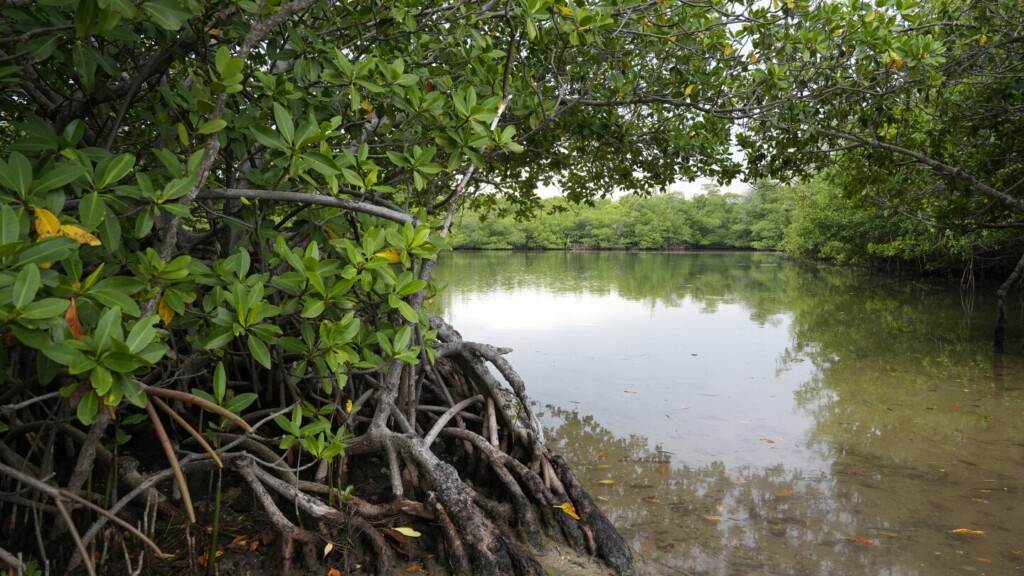
Florida's beloved state park system, long celebrated as a refuge of wildness amid rapid urbanisation, finds itself at the centre of a growing controversy. Governor Ron DeSantis' administration has unveiled plans to introduce golf courses, pickleball courts, disc golf facilities and hotels with up to 350 rooms across nine state parks stretching from Miami to the Panhandle. The proposal, announced by the Florida Department of Environmental Protection, has triggered an unexpected wave of resistance that cuts across party lines, uniting environmental advocates, conservative lawmakers and members of the governor's own cabinet in opposition. At stake is not merely the future recreation options in these parks but the very character of spaces that have remained largely undeveloped while surrounding areas have given way to condos, motels and strip malls. As public meetings loom and petitions gather tens of thousands of signatures, the debate raises fundamental questions about balancing public access with conservation in an era of increasing development pressure.
The administration's vision encompasses significant construction projects at some of Florida's most ecologically sensitive and popular state parks. At Topsail Hill Preserve State Park near Destin – renowned for its 25-foot high sand dunes that stand as one of the last undeveloped stretches of the Gulf Coast – plans include up to four pickleball courts, a disc golf course and a hotel capable of accommodating 350 guests. Eric Draper, former head of the Florida Park Service, characterised this scale as 'more in line with a conference centre than a quiet beach retreat', noting that visitors currently enjoy unobstructed views for miles along the beach without sight of development.
Further south, Jonathan Dickinson State Park in Martin County faces proposals for a golf complex that would necessitate removing existing boardwalks and observation towers, relocating park staff residences and offices, and displacing visitor cabins. The park, situated north of West Palm Beach on the state's southeast coast, has become a focal point of opposition, with a Change.org petition against the golf complex gathering over 60,000 signatures by mid-week. Other parks included in the nine-site proposal are located near major tourist hubs including Miami, Tampa, Panama City and St. Augustine, suggesting the development targets areas already experiencing high visitor numbers.
Opponents argue that the proposed developments threaten fragile ecosystems that have found sanctuary within state park boundaries. Julie Wraithmell, executive director of Audubon Florida, emphasised that these parks 'are the last strongholds for a lot of wildlife in rapidly urbanising communities in Florida'. She highlighted the Florida scrub-jay – a threatened species endemic to the state – as particularly vulnerable, noting that state parks provide outsized importance not just for conservation but also as places where people can experience 'what Florida was like'.
The ecological stakes extend beyond individual species. State parks represent islands of biodiversity in a landscape where sugar sand beaches, mangrove forests and other natural habitats have largely given way to urban development. Advocates warn that introducing intensive recreational facilities like golf courses – which require significant land clearing, irrigation, chemical maintenance and habitat fragmentation – could undermine decades of conservation work. The concern is not merely about immediate construction impacts but about setting a precedent that could erode the protected status of these lands over time.
Perhaps the most striking aspect of the backlash is its cross-party nature, emerging in a political climate where Governor DeSantis typically enjoys robust support from Republican lawmakers. The opposition includes outgoing Republican Senate President Kathleen Passidomo, who stated on social media that her 'vision for state parks did not contemplate the addition of golf courses and hotels, which in my view are not in-line with the peaceful and quiet enjoyment of nature'. She added that 'the proposal should not move forward in its current form'.
This resistance echoes historical patterns where similar proposals from Republican administrations have faltered due to public pushback. In 2015, then-Governor Rick Scott's administration abandoned plans to allow cattle grazing and timber harvesting in park lands after public opposition. Even legendary golfer Jack Nicklaus' long-standing efforts to secure state funding for golf courses in parks have previously 'fizzled following public pushback'. The current controversy suggests that state parks hold a unique place in Floridians' affections that transcends typical political divides.
The DeSantis administration defends the proposal as an effort to make public lands 'more accessible to the public', quoting Theodore Roosevelt's belief that national parks exist for 'the benefit and enjoyment of the people'. A spokesperson characterised the plans as complementary to existing investments in conservation, arguing that development and preservation are not mutually exclusive goals.
However, critics counter that true accessibility does not require transforming natural spaces into venues for organised sports or large-scale lodging. Wraithmell suggested an alternative approach: 'Absolutely there is demand for more people to enjoy state parks. The solution is not to try to cram as many people into a park as we can …. The solution is to create more state parks.' This perspective frames the issue not as a choice between access and preservation but as a question of whether development should occur within existing protected areas or through expansion of the park system itself.
The controversy over developing golf courses and hotels in Florida's state parks reveals a deep-seated public attachment to these spaces as refuges of nature in an increasingly developed landscape. While the administration argues that such facilities would enhance public access, opponents contend that the true value of state parks lies in their current state – as places where visitors can experience unspoiled Florida landscapes and observe wildlife that struggles to survive elsewhere. The bipartisan nature of the opposition suggests that, regardless of political affiliation, many Floridians view these parks not as underutilised assets awaiting commercial development but as essential components of the state's natural heritage that require protection rather than transformation. As public meetings proceed and petitions continue to gain traction, the outcome will likely serve as a bellwether for how other states balance development pressures with conservation imperatives in their own protected natural spaces.
Originally reported by apnews.com. Adapted for our readers with AI assistance.
Keep reading
Business
An analysis of the structural and institutional factors that entrench governance failures in Nigeria, from patronage politics and weakened oversight to the urgent need…
Politics
Yari says the APC will emphasise Tinubu’s achievements in 2027. This analysis explains how voters can examine outcomes, baselines and campaign evidence.
Lifestyle
Obi says his wife funds her own purchases. This analysis separates his explanation, unverified handbag prices and the evidence needed to assess public spending.
TAMFIS NIG LTD
Electrical and instrumentation engineering, bid preparation and consulting, IT and software.

