
Top Stories
Discovery beneath soccer field reveals massive medieval convent lost for centuries
NEWYou can now listen to Fox News articles! Researchers recently uncovered a long-lost medieval convent in an unusual location in Denmark: a soccer field…
TAMFIS NIG LTDRC 8067447CAC ACTIVEFinima, Bonny Island, Rivers State

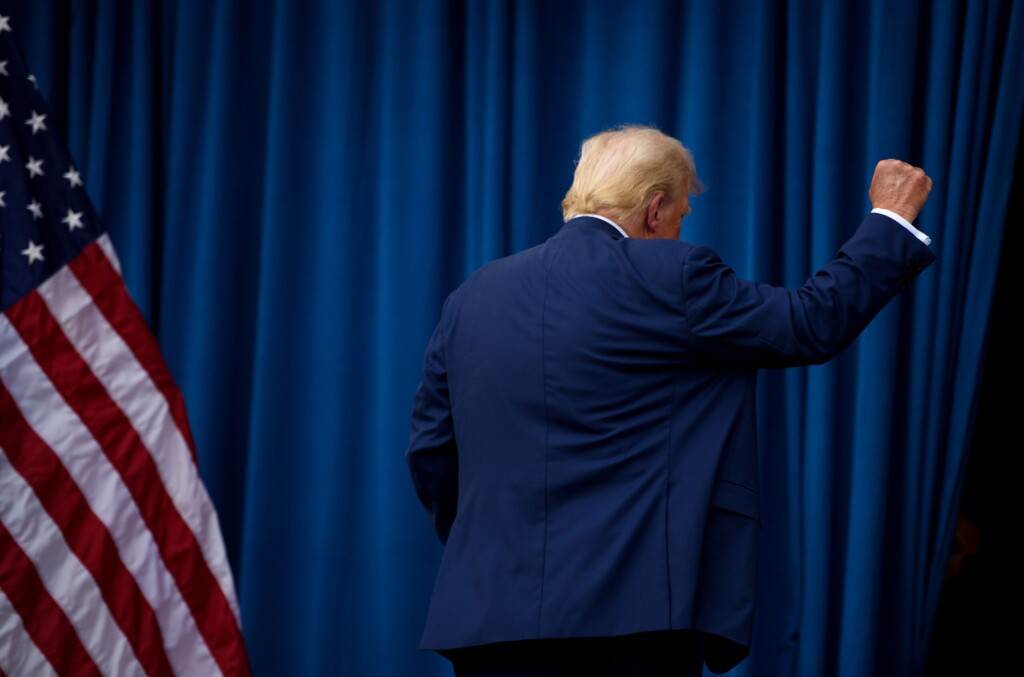
In the high-stakes 2024 presidential race, every endorsement and strategic move carries heightened significance. Amid the Democratic Party's recent surge, highlighted by energized convention speeches and displays of unity, the Trump campaign is turning its attention to Robert F. Kennedy Jr., a notable figure whose potential exit from the race and subsequent endorsement could shift the electoral landscape. This article delves into how Trumpworld perceives RFK Jr.'s role in blunting Democratic momentum, the internal dynamics shaping campaign strategies, and the broader implications for the tight contest ahead.
Robert F. Kennedy Jr., known for his distinctive political stance and appeal to a subset of voters, holds a unique position in the 2024 presidential race. His anticipated withdrawal from the contest and endorsement of Donald Trump could serve as a critical pivot point, especially in swing states where margins are razor-thin. Trump’s campaign views this move as an opportunity to consolidate votes that might otherwise fragment the conservative and anti-establishment electorate.
According to campaign insiders, RFK Jr.’s backing could translate into a measurable boost in key battlegrounds such as Arizona and Pennsylvania. While the exact magnitude of this boost remains uncertain, projections suggest it could add approximately two percentage points in these pivotal states. In an election where every point counts, this increment might prove decisive in tipping the balance toward Trump.
However, the endorsement’s impact is nuanced. Some RFK Jr. supporters may choose to abstain rather than fully shift allegiance to Trump, given ideological differences. Despite this, Trumpworld remains optimistic, viewing the endorsement as a strategic reset that could neutralize the momentum Democrats have gained post-convention.
The Democratic Party’s recent convention showcased a unified front, with powerful speeches from figures like Kamala Harris and the Obamas, which have energized their base and elevated polling numbers. This surge poses a significant challenge for Trump’s campaign, which has grappled with internal discord and fluctuating messaging.
To counter this, Trump’s campaign strategists, including key figures like Susie Wiles and Chris LaCivita, have emphasized a disciplined focus on policy issues rather than personal attacks. Their goal is to present a cohesive message that resonates with voters concerned about economic and national security issues, aiming to regain traction in critical swing states.
Despite these efforts, the campaign faces the ongoing challenge of balancing Trump’s instinctual communication style with the need for strategic discipline. This balancing act is crucial as the campaign seeks to blunt the Democrats’ narrative and reestablish Trump's appeal to undecided voters.
In a surprising move, Donald Trump rehired Corey Lewandowski, his 2016 campaign manager, as a senior adviser. Lewandowski is known for his aggressive campaign style and for encouraging Trump to embrace his unfiltered persona. This decision signals a potential shift toward a more combative campaign approach.
Lewandowski’s presence introduces both opportunities and risks. His advocacy for a ‘let Trump be Trump’ mantra may energize the base but also risks alienating moderate voters and complicating efforts to maintain a disciplined policy-focused campaign. Additionally, Lewandowski’s controversial past and history of internal campaign conflicts could exacerbate existing tensions within Trump’s team.
The influence of Lewandowski was evident during a recent rally in North Carolina, where Trump openly mocked calls from advisers to avoid personal attacks and stick to policy. This episode highlighted the tension between maintaining campaign discipline and leveraging Trump’s combative style as a political tool.
The Democratic National Convention featured a series of pointed speeches by prominent figures including Barack and Michelle Obama, which sharply criticized Trump’s record and leadership. These speeches have been instrumental in rallying Democratic voters and framing the election narrative around issues of competence and unity.
Trump has responded by dismissing these critiques as unfounded and politically motivated, framing Democrats as lacking solutions for everyday Americans. However, the effectiveness of this rebuttal remains uncertain as voters process the messaging from both sides.
The ongoing exchange of personal attacks and policy debates underscores the contentious nature of the 2024 race. For Trump, managing the balance between counterattacks and substantive policy discussion will be critical to maintaining voter support amid heightened scrutiny.
Trump’s campaign has cited internal polling data suggesting that Kamala Harris’s post-convention polling bounce is softening, with their own support reportedly trending upward across key battleground states. These internal metrics provide a cautiously optimistic outlook for the campaign as it seeks to regain lost ground.
Despite this, the reliability of internal polls can be variable, and external public polls continue to show a competitive but challenging landscape for Trump. The campaign’s narrative emphasizes that Harris’s appeal may be more superficial than substantive, highlighting perceived gaps in the Democrats’ policy proposals.
Voter sentiment in swing states remains fluid, with economic concerns, national security, and social issues playing pivotal roles. The Trump campaign aims to leverage these factors, alongside potential endorsements like RFK Jr.’s, to solidify support among undecided and moderate voters.
Fundraising remains a critical metric of campaign viability and momentum. Recent reports indicate that Kamala Harris raised approximately $310 million in July alone, significantly outpacing the Trump campaign’s haul, which was less than half that amount during the same period.
This fundraising disparity poses challenges for Trump in terms of advertising reach, ground game, and overall campaign infrastructure. Adequate resources are essential to sustain competitive efforts in swing states and counter the Democrats’ well-funded messaging campaigns.
Efforts to engage and motivate donors have been complicated by reported frustrations within Trump’s donor base, highlighting the need for a renewed fundraising strategy that can capitalize on endorsements and policy messaging to boost contributions.
One of the Trump campaign’s primary concerns is the risk posed by RFK Jr. continuing as a third-party candidate, which could split the conservative and anti-establishment vote. Such a scenario is viewed as potentially catastrophic for Trump’s chances, as both candidates appeal to overlapping voter demographics.
The anticipated withdrawal and endorsement by RFK Jr. is therefore seen as a strategic move to consolidate these votes and avoid fragmentation. However, the extent to which RFK Jr.’s supporters will transfer their allegiance remains uncertain, and some may opt to abstain or vote for other candidates.
Managing this dynamic is crucial for Trumpworld as it navigates the complexities of voter behavior and seeks to maximize electoral support in a tightly contested race.
As the campaign enters a critical phase, Trump’s team is focused on refining messaging and maximizing the electoral map’s potential. Emphasizing policy over personal grievances, while leveraging endorsements and addressing fundraising challenges, are central to their approach.
The role of RFK Jr.’s endorsement will be closely watched as polls begin to reflect post-convention dynamics. The campaign’s ability to translate endorsements into tangible voter support could influence the trajectory of the race in the coming months.
Ultimately, the 2024 election remains highly competitive, with both campaigns adapting strategies in response to shifting political currents. Trumpworld’s hope is that strategic endorsements and renewed focus will blunt Democratic momentum and position Trump for a successful reelection bid.
The 2024 presidential campaign is entering a pivotal stage where endorsements, messaging discipline, and resource allocation will profoundly influence electoral outcomes. Trumpworld’s focus on securing Robert F. Kennedy Jr.’s endorsement reflects a strategic effort to consolidate votes and counter the Democratic surge following their convention. While challenges such as fundraising gaps and internal campaign tensions persist, the Trump campaign’s ability to harness endorsements and maintain a disciplined, policy-driven message could prove decisive. As voters weigh their options in a tightly contested race, the interplay between these factors will shape the path to November.
Originally reported by vanityfair.com. Adapted for our readers.
Keep reading
Top Stories
NEWYou can now listen to Fox News articles! Researchers recently uncovered a long-lost medieval convent in an unusual location in Denmark: a soccer field…
News
By Engr. Tamunofiniarisa BrownReading Time: 6 Minutes The conflict between Russia and Ukraine is often framed in the media as a simple battle between…
TAMFIS NIG LTD
Electrical and instrumentation engineering, bid preparation and consulting, IT and software.