
Lifestyle
How to Find a Room Rental That Fits Your Budget and Lifestyle
Lifestyle Choosing a room rental involves more than selecting the lowest monthly figure. Housing costs interact with commuting, food, utilities, privacy, safety, and household…
TAMFIS NIG LTDRC 8067447CAC ACTIVEFinima, Bonny Island, Rivers State

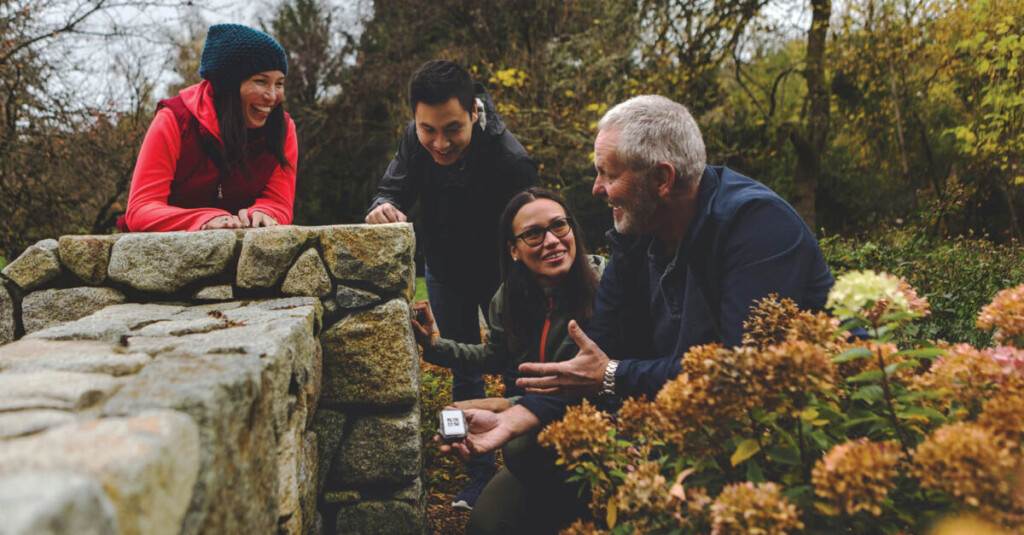
In an age where digital screens dominate leisure time, a quiet revolution is taking place in parks, forests and urban spaces worldwide. Geocaching – a real-world treasure hunt using GPS coordinates – has grown from a niche experiment into a global phenomenon with over 3.3 million active caches across 190+ countries. For shoppers seeking meaningful experiences over material goods, business professionals looking for team-building activities, and families wanting screen-free adventures, geocaching offers a unique blend of technology, exploration and community engagement that requires little more than a smartphone and a sense of curiosity.
The origins of geocaching trace back to May 2000, when GPS enthusiast Dave Ulmer hid a container in Oregon and posted its coordinates online to test the accuracy of newly available civilian GPS signals. Within three days, someone found the cache, logged their discovery, and the concept was born. Four months later, Jeremy Irish, Bryan Roth and Elias Alvord launched Geocaching.com to create a central platform for sharing cache locations worldwide.
Today, the system operates on a beautifully simple principle: participants hide waterproof containers (geocaches) at specific GPS coordinates, then publish the coordinates and hints on Geocaching.com or through the official app. Seekers use smartphone GPS to navigate to the location, search for the hidden container, sign the physical logbook inside, and optionally trade small trinkets of equal value before carefully re-hiding the cache for the next seeker.
What began as a technical experiment has evolved into a sophisticated global network. The platform now hosts caches in extraordinarily diverse locations – from city centres and suburban parks to remote mountain trails, underwater sites and even aboard the International Space Station. This accessibility means anyone with a smartphone can participate, regardless of location or experience level.
For consumers increasingly prioritising experiences over possessions, geocaching delivers adventure without the cost or complexity of traditional travel. As Joshua Johnson – known online as the Geocaching Vlogger with 800,000 followers – explains: 'I received a handheld GPS in 2008 and found my first geocache; I was absolutely hooked.' His journey from casual participant to content creator highlights how the activity scales with engagement – from occasional weekend hunts to documenting expeditions across continents.
The activity's versatility is a key strength. Geocaches vary widely in difficulty and terrain, rated on a scale of one to five for both parameters. Beginners are advised to start with level-one ratings for an accessible introduction, while experienced seekers can pursue complex puzzle caches requiring code-breaking, multi-stage hunts spanning several locations, or caches requiring specialised equipment like scuba gear or climbing equipment.
Beyond the thrill of the hunt, geocaching fosters meaningful connections with local environments. Players often discover hidden histories, overlooked natural features and community landmarks they would otherwise miss. The practice encourages Leave No Trace principles – seekers must re-hide caches exactly as found and obtain landowner permission before placing new ones – promoting responsible outdoor recreation.
Geocaching's structured yet flexible format makes it valuable for commercial and organisational applications. Forward-thinking businesses use custom geocaching trails for team-building exercises, client engagement programmes and location-based marketing campaigns. Retail centres have implemented geocaching trails to increase foot dwell time, while tourism boards create historical or cultural geocaching routes to showcase local heritage in an interactive format.
The tourism sector has particularly embraced geocaching as a sustainable attraction. Destination marketing organisations promote geo-trails that guide visitors through neighbourhoods, parks and heritage sites, distributing economic benefits beyond traditional tourist hotspots. Unlike conventional tourism, geocaching disperses foot traffic across wider areas and encourages repeat visits as new caches are regularly added.
Educational institutions utilise geocaching for geography lessons, environmental science projects and physical education programmes. The activity naturally integrates curriculum elements – coordinate systems, mapping skills, ecological observation and problem-solving – while getting students outdoors. Some universities even offer geocaching clubs as part of their outdoor recreation programmes. Additionally, corporate wellness programs have adopted geocaching as a way to promote employee health and engagement through outdoor activity and problem-solving challenges.
For those interested in trying geocaching, the barrier to entry is remarkably low. The official Geocaching app (available on iOS and Android) provides access to the global cache database, navigation tools and logging functions. A basic smartphone with GPS capability is sufficient – no specialised equipment is required for beginner-level caches.
Best practices for newcomers include: starting with traditional caches rated one-star for difficulty and terrain; bringing a pen to sign physical logbooks; carrying small trade items if wishing to exchange contents; respecting private property and obtaining necessary permissions; and practicing cache-in-trash-out (CITO) principles by removing litter found during searches.
The community aspect adds significant value. Local geocaching events – known as 'mega-events' when exceeding 500 attendees – provide opportunities to meet fellow enthusiasts, learn advanced techniques and participate in organised cache hunts. Online forums and social media groups offer ongoing support, with experienced players often mentoring newcomers through challenging caches. These events also frequently include workshops on GPS navigation, cache creation, and environmental stewardship, further enriching the participant experience.
Geocaching represents more than just a hobby – it embodies a meaningful shift in how people engage with technology, environment and community. In an era where digital engagement often feels isolating, geocaching uses smartphone technology as a gateway to real-world exploration, physical activity and social connection. For consumers seeking value in experiences rather than accumulations, businesses looking for innovative engagement tools, and families wanting screen-free adventures that spark curiosity about the world around them, geocaching offers a proven, accessible and continually evolving platform. As the activity approaches its 25th anniversary, its enduring appeal lies in this elegant simplicity: using modern navigation tools to rediscover the timeless joy of discovery, one hidden container at a time.
Originally reported by americanlifestylemag.com. Adapted for our readers with AI assistance.
Keep reading
Lifestyle
Lifestyle Choosing a room rental involves more than selecting the lowest monthly figure. Housing costs interact with commuting, food, utilities, privacy, safety, and household…
Lifestyle
Lifestyle Mention Phuket and visions of a sun-kissed beach escape immediately come to mind — where days are spent basking in the tropical sun by…
Lifestyle
Lifestyle Lifestyle When asked to name the most productive American trot set apart, most would say...
TAMFIS NIG LTD
Electrical and instrumentation engineering, bid preparation and consulting, IT and software.