
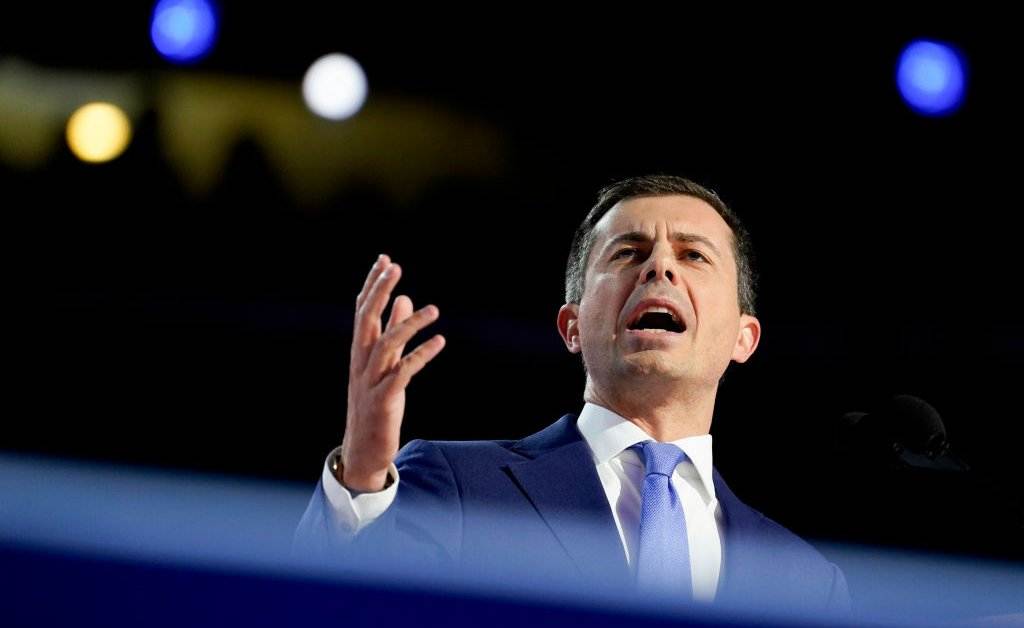
On a pivotal night at the 2024 Democratic National Convention held in Chicago, Secretary of Transportation Pete Buttigieg delivered a speech that resonated deeply with Democrats and political observers alike. Known for his sharp communication skills and rising influence within the party, Buttigieg used this platform to articulate a vision he termed “a better politics.” His remarks blended personal anecdotes, pointed critiques of the opposition, and a hopeful message about America’s future. This comprehensive article breaks down the biggest moments from Buttigieg’s speech, highlighting how his words reflect the Democratic Party’s strategy and aspirations heading into the 2024 election cycle.
Pete Buttigieg’s Role as a Democratic Messenger
Pete Buttigieg, once the mayor of South Bend, Indiana, has solidified his position as one of the Democratic Party’s most trusted and articulate voices. Since joining the Biden administration as U.S. Transportation Secretary, he has frequently appeared on cable news and late-night television, effectively conveying the party’s message to diverse audiences. His ability to engage with conservative viewers, including appearances on Fox News, has distinguished him as a bridge between political divides.
During the 2024 Democratic National Convention, Buttigieg’s speech underscored his unique role as a messenger who can connect with both progressive and moderate voters. His blend of humor, personal experience, and policy insight allowed him to communicate complex ideas in an accessible way. This skill is crucial for the Democrats as they seek to expand their coalition and counteract Republican narratives.
Buttigieg’s prominence also stems from his 2020 presidential primary campaign, where he emerged as a fresh face with a compelling story. Although not selected as Vice President in the Biden-Harris ticket, his ongoing support for the administration and his vocal presence in political discourse have maintained his influence within the party.
Opening with Humor and Accessibility
Buttigieg began his primetime DNC speech with a lighthearted and self-aware joke: “I’m Pete Buttigieg, and you might recognize me from Fox News.” This line immediately set a tone of accessibility and self-confidence, signaling his comfort in engaging audiences across the political spectrum. It also highlighted his frequent appearances on conservative media, a notable aspect of his communication strategy.
The humor served as a bridge, inviting viewers to listen closely to his message rather than dismiss him based on political affiliation. This approach aligns with Buttigieg’s broader emphasis on unity and dialogue, which he reiterated throughout the speech. By starting with levity, he humanized himself and softened the partisan atmosphere that often dominates political events.
This tactic of blending humor with serious political commentary exemplifies Buttigieg’s style, making complex policy discussions more relatable. It also reinforced his narrative of ‘a better politics’—one that is not just about power struggles but about connecting with people on a human level.
Challenging the Republican Opposition
One of the most striking moments of Buttigieg’s speech was his pointed critique of the Republican vice-presidential candidate, Ohio Senator J.D. Vance. Buttigieg accused Vance of promoting a divisive and negative vision for America, stating that Vance’s approach is rooted in “darkness” and grievance politics. This characterization was a direct challenge to the Republican campaign’s tone and tactics.
Buttigieg emphasized that America is not receptive to this “darkness,” suggesting that voters are looking for hopeful and inclusive leadership instead. By framing the 2024 election as a choice between optimism and negativity, Buttigieg sought to rally Democratic supporters around a message of positivity and progress.
He also addressed Vance’s controversial remarks about political leaders without biological children, a pointed reference to both Buttigieg and Vice President Kamala Harris. Buttigieg refuted the notion that parenthood is a prerequisite for commitment to the country, drawing on his military service in Afghanistan and his family life with his husband and adopted twins to underscore his dedication.
Personal Stories Highlighting ‘A Better Politics’
Throughout his speech, Buttigieg wove in personal anecdotes that illustrated the transformative power of inclusive politics. He reflected on his journey as a gay man who has built a family and pursued a political career, emphasizing how this was once considered impossible in America. His story served as a testament to the progress made through courage, activism, and political engagement.
Buttigieg described the evolution of his life from something unimaginable to almost ordinary within a single generation. This narrative underscored the tangible impact of ‘a better politics’—one that fosters belonging and opportunity rather than exclusion and fear.
By sharing these experiences, Buttigieg connected abstract political ideals to real-world outcomes. His family’s existence symbolized the broader societal changes that Democrats aim to protect and expand, reinforcing the stakes of the 2024 election.
Defining the ‘Right Kind of Politics’
Buttigieg articulated a vision of politics centered on decency, openness, and bravery. He praised the Democratic ticket of Kamala Harris and Tim Walz as embodying this ideal, portraying them as leaders who build bridges rather than walls. This framing positioned Democrats as the party of inclusion and constructive governance.
He contrasted this positive vision with the actions of political opponents who seek to ban books and suppress diverse voices. By highlighting these differences, Buttigieg appealed to voters’ desires for a politics that is not only effective but also just and humane.
This section of the speech reinforced the concept that politics can be a source of joy and empowerment when rooted in shared values and mutual respect. Buttigieg’s optimism was a call to action for Americans to participate in shaping a better future through their votes and civic engagement.
Buttigieg’s Military Service and Its Influence
A significant element of Buttigieg’s speech was his reflection on his military service in Afghanistan. He used this experience to challenge critics who questioned his stake in the country’s future due to his family status. Buttigieg emphasized that his commitment was demonstrated through physical service and sacrifice alongside fellow soldiers.
This narrative served to humanize Buttigieg and underscore his dedication to national security and public service. It also countered attempts to delegitimize him based on personal characteristics, reinforcing the idea that leadership is defined by actions and values rather than traditional markers.
By connecting his military background to his political vision, Buttigieg highlighted the diverse experiences that contribute to effective governance. This helped broaden the appeal of his message beyond typical partisan lines.
The Role of Storytelling in Political Change
Buttigieg emphasized the power of storytelling as a tool for political transformation. He noted that progress is achieved not only through policy but also through the narratives that inspire and mobilize people. His own story, and those of others who have overcome barriers, serve as examples of how ideals can become realities.
He acknowledged that change requires idealism, courage, organizing, persuasion, and storytelling. This holistic view of politics highlights the importance of communication in shaping public opinion and fostering collective action.
Buttigieg’s focus on storytelling aligned with his broader message of hope and inclusion, suggesting that the Democratic Party’s success depends on its ability to connect emotionally with voters and articulate a compelling vision for the future.
Looking Ahead: Buttigieg’s Vision for America
In closing, Buttigieg painted a picture of an America united by shared values and a commitment to progress. He called for a politics that transcends division and embraces the full diversity of the nation. His speech was both a critique of the current political climate and a hopeful blueprint for renewal.
He urged Americans to participate in this ‘better politics’ by voting, organizing, and engaging with their communities. Buttigieg’s message was clear: the future belongs to those who choose courage over fear and inclusion over exclusion.
As the 2024 election approaches, Buttigieg’s speech serves as a rallying cry for Democrats and a reminder of the stakes involved. His vision of politics as a force for good underscores the transformative potential of leadership grounded in empathy and determination.
Conclusion
Pete Buttigieg’s 2024 Democratic National Convention speech was a defining moment that showcased his ability to articulate a hopeful and inclusive vision for America. Through a blend of humor, personal narrative, and pointed political critique, he delivered a message that resonated with voters seeking an alternative to divisive politics. Buttigieg’s call for ‘a better politics’—one grounded in decency, courage, and unity—captures the spirit of the Democratic Party’s campaign as it faces the challenges of the 2024 election. His speech not only illuminated his role as a rising star in American politics but also set a hopeful tone for the future of the nation.