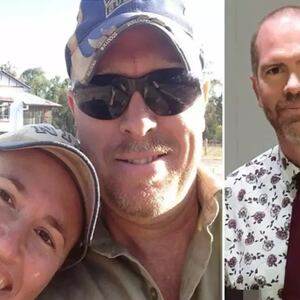
Queensland’s off-grid cop killers: How conspiracy theorist trio ambushed police in Australia’s first domestic ‘terrorist’ attack
In December 2022, a quiet rural property in Queensland became the site of Australia’s first domestically motivated terrorist attack, leaving two police officers and a neighbour dead. The incident, carried out by brothers Gareth and Nathaniel Train and Gareth’s wife Stacey, has since been examined in detail during a coronial inquest. While the tragedy is deeply disturbing, it also presents important lessons for individuals interested in self-reliance, off-grid living, and community resilience. This article explores the circumstances surrounding the ambush not to sensationalise violence, but to extract meaningful takeaways about the risks of isolation, the influence of extremist ideologies, and the importance of balanced preparedness — all relevant to shoppers, homeowners, and small business owners navigating today’s complex social landscape.
The Appeal and Risks of Off-Grid Living
The Train property exemplified many ideals associated with off-grid living: solar panels, water tanks, food storage, and a deliberate disconnection from mains electricity. For many Australians and global citizens alike, such setups represent security, sustainability, and independence — values increasingly sought amid economic uncertainty and environmental concerns. The attraction is understandable; rising utility costs, supply chain disruptions, and a desire for self-sufficiency have driven growing interest in alternative energy, bulk food storage, and rural relocation.
However, the inquest revealed that the Trains’ retreat from society was not merely practical but deeply ideological. Their property featured extensive fortifications, including a sniper hide, barricades, and signal-blocking devices, indicating a mindset focused not on resilience but on anticipated conflict. This distinction is crucial: preparedness for natural disasters or service interruptions differs fundamentally from preparing for societal collapse or armed confrontation. Responsible off-grid living emphasises community engagement, skill-sharing, and sustainable practices — not isolation coupled with suspicion of neighbours or authorities.
For consumers considering solar kits, water filtration systems, or long-term food supplies, the Queensland case serves as a reminder that preparedness should enhance safety and well-being, not fuel fear or paranoia. Products marketed toward self-reliance are most valuable when integrated into broader community networks rather than used to withdraw from them.
How Conspiracy Theories Took Hold
Testimony at the inquest showed that Gareth Train began sharing conspiracy theories online in March 2020, coinciding with the early months of the COVID-19 pandemic. His wife Stacey and brother Nathaniel gradually adopted these beliefs, which included apocalyptic Christian expectations and deep distrust of government and law enforcement. By August 2020, all three were immersed in a shared worldview that culminated in the production of a YouTube video titled 'Don’t Be Afraid', posted hours after the ambush, in which they referred to police as 'devils and demons'.
This progression highlights how isolated environments can amplify fringe beliefs when combined with heightened anxiety and limited external input. The pandemic created conditions ripe for misinformation: disrupted routines, increased screen time, and genuine uncertainty about health and governance. For individuals spending more time at home — whether working remotely, managing households, or running home-based businesses — the risk of encountering and internalising unverified claims increases without active efforts to seek diverse, credible sources.
Media literacy and critical thinking are not just academic skills; they are practical tools for everyday life. Consumers evaluating product claims, financial advice, or health information benefit from cross-referencing sources, checking author credentials, and recognising emotional manipulation. In an age of algorithmic content promotion, deliberately seeking balanced perspectives helps prevent the entrenchment of harmful narratives.
The Role of Mental Health in Isolated Settings
A significant aspect of the inquest involved expert testimony suggesting Gareth Train may have suffered from a mental health condition that contributed to a 'shared psychotic disorder' — a rare phenomenon where delusional beliefs are adopted by close associates. The coroner heard that the Trains exhibited identical persecutory and religious beliefs meeting the clinical definition for delusions. This underscores how isolation, particularly when combined with untreated mental illness, can distort reality not just for individuals but for entire households or small groups.
For those living in remote areas or managing home-based enterprises, access to mental health support remains a practical concern. Telehealth services have expanded significantly in recent years, offering counselling and psychiatric consultations via video link — a vital resource for properties without easy access to clinics. Employers and business owners with remote teams should consider including mental health provisions in employee benefits or contractor agreements, recognising that psychological well-being directly impacts decision-making, risk assessment, and interpersonal safety.
Communities also benefit from low-pressure check-ins: neighbourhood groups, farming cooperatives, or local business associations can foster connections that help identify when someone may be struggling. Simple gestures — sharing excess produce, offering to lend tools, or inviting isolated residents to community events — can serve as informal early-warning systems while strengthening social cohesion.
Preparedness Done Right: Balancing Independence with Community
The tragedy in Queensland does not invalidate the value of preparedness; rather, it invites a redefinition of what true resilience looks like. Effective readiness for power outages, floods, or supply shortages includes practical steps like maintaining emergency kits, knowing evacuation routes, and having communication plans — but it also means knowing your neighbours, participating in local emergency drills, and supporting community response efforts.
From a commercial perspective, businesses that serve the preparedness market — whether selling solar generators, water purifiers, or long-term food supplies — have an opportunity to promote responsible messaging. Highlighting real-world scenarios such as storm recovery or temporary job loss, rather than apocalyptic scenarios, builds trust and appeals to a broader, more sustainability-conscious audience. Campaigns that showcase families using emergency gear during camping trips or power cuts position preparedness as a positive, empowering practice.
Consumers, in turn, can look for brands that provide educational resources alongside products — guides on food rotation, first aid basics, or sustainable gardening — signalling a commitment to informed use rather than fear-based purchasing. In both personal and professional contexts, the most resilient systems are those that connect people, not cut them off.
What this means
The events in Queensland were undeniably tragic, resulting in irreversible loss and trauma for the victims’ families, the responding officers, and the wider community. Yet by examining the factors that contributed to this outcome — ideological isolation, unchecked misinformation, and possible mental health struggles — we gain insight into how similar paths might be prevented elsewhere. For individuals embracing self-sufficiency, the lesson is clear: resilience is not measured by how well one can hide from the world, but by how effectively one can live within it, supported by knowledge, connection, and sound judgment. In an era where uncertainty is constant, the most valuable preparations are not just those that sustain the body, but those that nurture the mind and reinforce the bonds that make communities strong.
Originally reported by nzherald.co.nz. Adapted for our readers with AI assistance.
Obi says his wife funds her own purchases. This analysis separates his explanation, unverified handbag prices and the evidence needed to assess public spending.
Omotola’s podcast remarks raise practical questions about income, reputation and values. Here is how professionals can assess offers without inventing claims about missed earnings.