
Politics
Science vs politics: Kiwi’s long road to EU health-claim approval
In August 2025, Zespri, the world’s largest marketer of kiwifruit, announced that the European Commission had approved what it described as the first health…
TAMFIS NIG LTDRC 8067447CAC ACTIVEFinima, Bonny Island, Rivers State

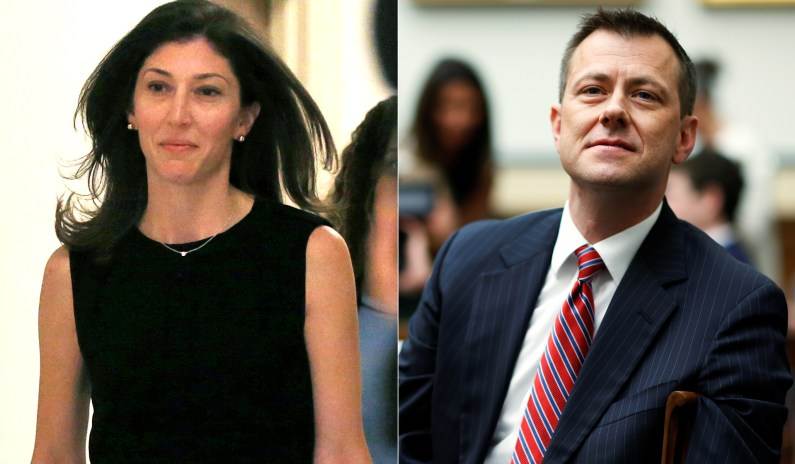
Peter Strzok and Lisa Page, two former FBI officials, became central figures in one of the most politically charged investigations in recent American history. Their text messages and actions during the FBI’s probe into the 2016 presidential election raised questions about impartiality and professionalism. Recently, both have received settlements that many critics argue are unmerited given the gravity of their conduct. This article provides a comprehensive analysis of why the settlement represents an undeserved reprieve, the background of their controversies, and the broader implications for institutional accountability.
Peter Strzok served as a senior FBI counterintelligence agent, playing a key role in the investigation into Russian interference in the 2016 U.S. presidential election. Lisa Page was an FBI lawyer who worked closely with Strzok during this period. Both were highly regarded within the bureau before their private text messages came under scrutiny.
Their relationship, both professional and personal, became public knowledge when the Inspector General’s report revealed text exchanges that suggested political bias against then-candidate Donald Trump. These revelations shifted public perception and raised concerns about the integrity of the FBI’s investigation.
The ensuing controversy led to both Strzok and Page being removed from the special counsel investigation and eventually facing disciplinary actions. Their cases became emblematic of the broader partisan battles surrounding the 2016 election and the FBI’s role.
The text messages exchanged between Strzok and Page revealed disparaging remarks about Donald Trump and expressed support for Hillary Clinton. Critics argued these messages betrayed a lack of impartiality crucial for their investigative roles. Supporters, however, claimed the texts were personal opinions that did not affect their professional conduct.
The Inspector General’s report highlighted these messages as evidence of potential bias, leading to widespread media coverage and political backlash. The content of the texts became a focal point for those questioning whether the FBI’s investigations were politically motivated.
Despite the controversy, no direct evidence emerged that their texts influenced the outcome of any investigations. Yet, the perception of bias alone was enough to damage the credibility of the FBI’s work in the eyes of many Americans.
Following the exposure of the text messages, both Strzok and Page faced internal FBI investigations. Strzok was formally fired in August 2018 for misconduct, while Page resigned from the bureau shortly after. These actions were viewed as necessary steps to uphold the bureau’s integrity.
The disciplinary measures underscored the FBI’s commitment to accountability, signaling that personal biases, especially those revealed in private communications, could have professional consequences. However, some critics argued the punishments were either too harsh or too lenient depending on their political perspectives.
The cases of Strzok and Page became cautionary examples within federal law enforcement, highlighting the delicate balance between personal beliefs and professional responsibilities in sensitive investigations.
In a surprising development, Peter Strzok and Lisa Page reached a settlement with the FBI and the Department of Justice, which included financial compensation and cleared them of certain allegations. The terms of the settlement were not fully disclosed, but it effectively ended ongoing legal disputes.
This settlement has been met with significant criticism from political commentators and the public, many of whom view it as an undeserved reprieve for individuals whose actions undermined trust in a critical federal institution.
Supporters of Strzok and Page argue that the settlement reflects recognition of procedural errors in their disciplinary processes and that it helps close a contentious chapter, allowing all parties to move forward.
Critics assert that Strzok and Page’s actions — particularly the biased texts — had real consequences for public confidence in the FBI and the justice system. Granting them a settlement sends a message that such conduct can be overlooked or lightly penalized.
The settlement arguably undermines efforts to enforce ethical standards within federal agencies. It raises concerns about accountability, suggesting that high-profile officials might evade full responsibility through legal maneuvers.
Furthermore, the reprieve may embolden similar behavior in the future, eroding the impartiality essential for law enforcement agencies tasked with safeguarding democratic processes.
The Strzok-Page case has become a litmus test for FBI accountability. How the bureau handles internal misconduct influences public perception and trust in federal investigations. The settlement complicates this dynamic by blurring lines between disciplinary action and legal negotiation.
Effective accountability mechanisms are vital to maintaining the FBI’s credibility. If employees believe they can avoid consequences through settlements, it may weaken internal discipline and encourage riskier behavior.
On the other hand, the case highlights the challenges of balancing fairness to employees with the need to uphold institutional standards, especially in politically charged environments.
The controversy surrounding Strzok and Page has been heavily politicized, with different factions interpreting the events to support their narratives. The settlement has reignited partisan debates about FBI impartiality and the integrity of the 2016 election investigations.
Public opinion remains divided. Some view Strzok and Page as scapegoats unfairly targeted for political reasons, while others see them as emblematic of deep-seated bias within federal law enforcement.
This division underscores the ongoing challenges faced by institutions like the FBI in maintaining neutrality and public trust amid a highly polarized political landscape.
The case of Peter Strzok and Lisa Page offers critical lessons about the importance of transparency, accountability, and professionalism within federal agencies. It highlights the need for clear guidelines on employee conduct and effective oversight mechanisms.
Moving forward, the FBI and other institutions must reinforce ethical standards and ensure that disciplinary processes are both fair and perceived as legitimate by the public.
Ultimately, restoring trust requires consistent enforcement of rules, open communication, and a commitment to impartiality, regardless of political pressures or individual personalities involved.
The settlement granted to Peter Strzok and Lisa Page represents a contentious and arguably undeserved reprieve that complicates efforts to uphold accountability within the FBI. While the complexities of their case highlight the challenges faced by federal law enforcement in politically charged environments, the need for impartiality and professionalism remains paramount. Moving forward, reinforcing ethical standards and ensuring transparent disciplinary processes will be critical to restoring public trust and safeguarding the integrity of the justice system. Without such measures, the risk of eroding confidence in vital institutions persists, undermining the very foundations of democratic governance.
Originally reported by nationalreview.com. Adapted for our readers.
Keep reading
Politics
In August 2025, Zespri, the world’s largest marketer of kiwifruit, announced that the European Commission had approved what it described as the first health…
News
By Engr. Tamunofiniarisa BrownReading Time: 6 Minutes The conflict between Russia and Ukraine is often framed in the media as a simple battle between…
Politics
Twenty-five years after the September 11 attacks, the family of Marine Travis Fuller reflects on his death in the Iraq War, grappling with the…
TAMFIS NIG LTD
Electrical and instrumentation engineering, bid preparation and consulting, IT and software.