
Top Stories
KFF Health News’ ‘What the Health?’: The Supreme Court and the Abortion Pill
Since the Supreme Court overturned Roe v. Wade in 2022, the landscape of abortion rights in the United S...
TAMFIS NIG LTDRC 8067447CAC ACTIVEFinima, Bonny Island, Rivers State

The 2024 US presidential race has entered a new phase of procedural combat, with the two leading campaigns locked in a public dispute over debate formats, networks and scheduling. What began as an agreement between Donald Trump and Joe Biden for two televised encounters has unravelled into a three-way negotiation involving the Republican nominee, the newly installed Democratic candidate Kamala Harris, and the television networks seeking to host them. The disagreement illuminates deeper strategic calculations about audience reach, moderator perceived bias, and the optics of political courage or avoidance.
The current impasse traces back to May when the Trump and Biden campaigns agreed to two debates: one on CNN on 27 June and a second on ABC on 10 September. The CNN encounter proceeded under conditions negotiated by the Biden team, including no live audience, muted microphones when not speaking, and moderators Jake Tapper and Dana Bash. Trump participated and, by most accounts, performed strongly enough to accelerate Biden's withdrawal from the race weeks later.
Biden's departure voided the original agreement, according to the Trump campaign. The Republican nominee argues that he negotiated with Biden, not Harris, and that the Democratic Party's mid-stream candidate swap constitutes a material change requiring fresh terms. The Harris campaign counters that the 10 September date on ABC remains binding and that she will appear with or without her opponent.
Fox News proposed an alternative: a 4 September debate in Pennsylvania moderated by Bret Baier and Martha MacCallum, both straight-news journalists rather than opinion hosts. The network invited both campaigns. Trump accepted immediately; Harris declined, characterising the offer as a 'Trump rally' in his 'safe space'.
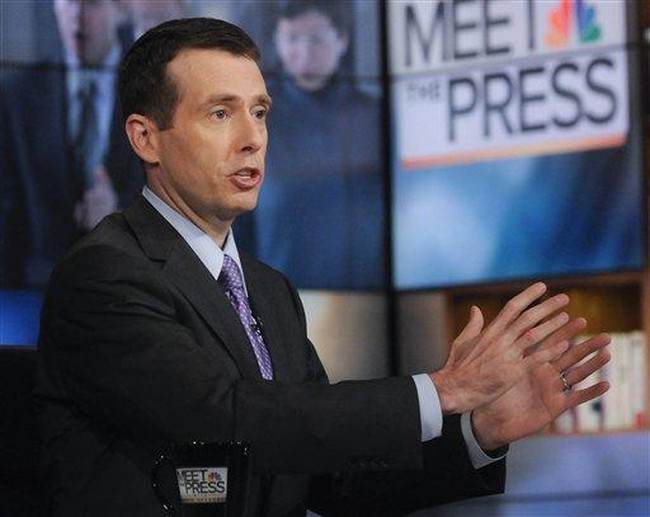
David Plouffe, who managed Barack Obama's 2008 and 2012 campaigns, amplified the Harris line on social media. 'Donald Trump is cowardly backing out of the debate he agreed to,' Plouffe wrote on X. 'Now, he seems only comfortable in a cocoon, asking his happy place Fox to host a Trump rally and call it a debate.' The phrase 'happy place' quickly became a talking point across Democratic-aligned commentary.
Republican commentators and independent observers pushed back on several fronts. First, Trump did debate on CNN in June — a network hardly friendly to his candidacy — and accepted every condition the Biden campaign imposed. Second, Fox News initiated the offer, not the Trump campaign. Third, the Baier-MacCallum pairing represents the network's news division, distinct from its primetime opinion lineup.
Critics also noted the asymmetry: Harris has not held a formal press conference or granted an interview to a non-sympathetic outlet since becoming the presumptive nominee. Her rally rhetoric — 'if you've got something to say, say it to my face' — contrasts with her refusal of the Fox forum. The Trump campaign frames this as the Democratic nominee avoiding unscripted scrutiny.
Each side's positioning reflects electoral arithmetic. Trump benefits from a live audience — his rallies are central to his political brand — and from a network where his base watches. But a hostile crowd in Pennsylvania, a swing state with a Democratic governor (Josh Shapiro, frequently mentioned as a potential Harris running mate), could backfire visually.
Harris gains by insisting on the ABC date: it portrays her as honouring a prior commitment while painting Trump as unreliable. ABC's larger general-election audience also exceeds Fox's. However, rejecting a major network's good-faith offer risks the 'chicken' label that has already spawned the hashtag #Chickenmala among Trump supporters.
The networks themselves have commercial incentives. A Trump-Harris debate on any channel would draw Super Bowl-level ratings. Fox, CNN and ABC each want the prestige and advertising revenue. The moderator selections — Tapper and Bash at CNN, Baier and MacCallum at Fox, whoever ABC assigns — will be parsed for perceived partisan leanings.
Presidential debates have no statutory basis; they are voluntary negotiations between campaigns and the Commission on Presidential Debates (CPD), though the CPD was sidelined this cycle. In 2020, the Trump campaign objected to CPD moderators and formats, eventually participating under revised terms. In 2016, Trump threatened to boycott a Fox News primary debate over moderator Megyn Kelly, then appeared anyway.
The current standoff is unusual only in its velocity. A sitting president dropped out, his vice president assumed the nomination without a primary vote, and the debate calendar collapsed within weeks. Both campaigns now face a prisoner's dilemma: appear and risk a poor performance, or refuse and absorb the 'coward' narrative.
Three scenarios appear most likely. First, Harris relents and accepts the 4 September Fox debate, perhaps with modifications (no audience, different moderators). Second, Trump relents and appears on ABC on 10 September, claiming he forced the Democrats to keep their word. Third, both hold firm, resulting in duelling town halls or separate interviews — a de facto debate without shared stage.
The Harris campaign's announcement of a running mate, expected as early as Monday 5 August, may influence the calculus. A pick like Shapiro could make a Pennsylvania debate more attractive to Democrats. Conversely, a Midwestern or Western choice might shift geographic priorities.
Voters in swing states — Pennsylvania, Michigan, Wisconsin, Arizona, Georgia, Nevada — will see the dispute through local lenses. The candidate perceived as more willing to engage may gain a marginal advantage in a race likely decided by tens of thousands of votes across those states.
The debate standoff is less about podiums and moderators than about narrative control in a campaign compressed into its final hundred days. Both candidates face a binary choice: accept the opponent's preferred venue and risk a hostile format, or refuse and own the 'coward' label. For voters, the dispute offers a preview of how each campaign handles pressure, negotiation and accountability — qualities the presidency tests daily. Whether on Fox, ABC, or in duelling town halls, the first Trump-Harris encounter will arrive soon enough. The terms may matter less than the fact of the meeting itself.
Originally reported by twitchy.com. Adapted for our readers with AI assistance.
Keep reading
Top Stories
Since the Supreme Court overturned Roe v. Wade in 2022, the landscape of abortion rights in the United S...
Top Stories
Top Stories Tamfitronics One evening in May, nursing assistant Debra Ragoonanan’s vision blurred during her shift at a state-run Massachusetts vet...
TAMFIS NIG LTD
Electrical and instrumentation engineering, bid preparation and consulting, IT and software.

