


Semiconductor in Healthcare Market Size, Share & Growth Forecast 2021-2026
Science & Technology

Semiconductor in Healthcare Market Size, Share & Growth Forecast 2021-2026

Technology tamfitronics The Semiconductor in Healthcare Market size was valued at USD 68.21 Bn. in 2023 and the total Semiconductor in Healthcare Market revenue is expected to grow at a CAGR of 11.41% from 2024 to 2030, reaching nearly USD 145.32 Bn. by 2030.Semiconductor in Healthcare  Market OverviewsThe Semiconductor in Healthcare is application of semiconductor technology in medical devices, equipment, and healthcare systems. Semiconductors are materials with electrical conductivity between that of a conductor and an insulator, and they are fundamental components in electronic circuits and devices. In the healthcare sector, semiconductors enable the development of advanced medical technologies, including diagnostic equipment, monitoring systems, therapeutic devices, and imaging tools. These components are essential for enhancing the accuracy, efficiency, and functionality of medical applications, ultimately improving patient care and outcomes, which is expected to boost the Semiconductor...
Continue reading
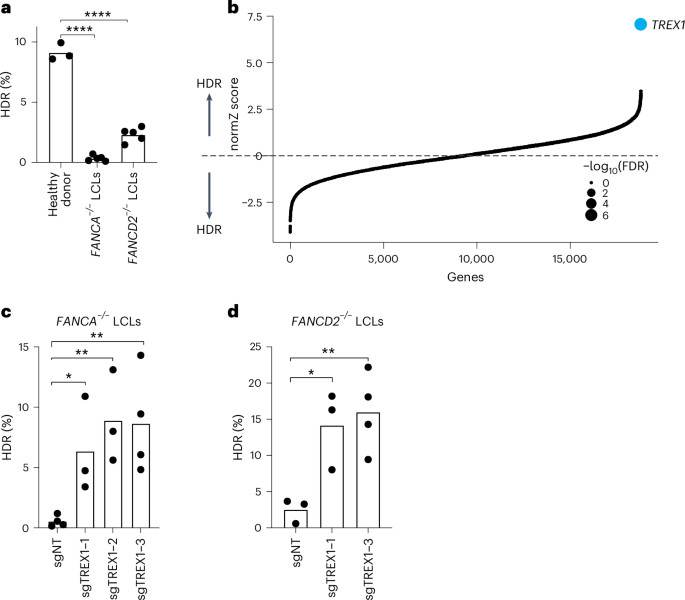
Removal of TREX1 activity enhances CRISPR–Cas9-mediated homologous recombination
Science & Technology

Removal of TREX1 activity enhances CRISPR–Cas9-mediated homologous recombination

Technology tamfitronics MainRepair of CRISPR–Cas9-induced double-strand breaks (DSBs) occurs by one of two main mechanisms: non-homologous end joining (NHEJ) or homology-directed repair (HDR)1,2,3. The HDR pathway is used to introduce sequences of up to 2–3 kilobases (kb) into the genome that are supplied on an exogenous DNA template. In most human cells, the efficiency of HDR is very low relative to NHEJ4,5. Cellular context plays an important role in HDR efficiency. HDR is cell cycle limited and most active in S/G2 (refs. 6,7,8). Differential expression, cellular background and/or mutational burden can also affect efficiency. CRISPR–Cas9-mediated targeting of the same locus with identical reagents in various cell types can result in variable efficiency, ranging from 30%...
Continue reading