
Boeing Starliner Strands 2 Astronauts on International Space Station
Science & Technology

Boeing Starliner Strands 2 Astronauts on International Space Station

NASA Space Technology NASA announced on Tuesday that astronauts Suni Williams and Butch Wilmore will be returning from the International Space Station no earlier than June 26. The pair launched on June 6 in the Boeing Starliner’s first crewed flight and were slated to return after a week, according to CNN. However, NASA has now delayed the return twice to buy time to understand better the issues the spacecraft experienced during its trip to the station.The June 6 launch was already a pushed-back ascent as NASA delayed the Starliner debut mission...
Continue reading
Starliner astronauts’ return trip has been pushed back even further
Science & Technology

Starliner astronauts’ return trip has been pushed back even further

NASA Space Technology Astronauts Butch Wilmore and Suni Williams, who flew on the much-delayed first crewed flight of Boeing’s Starliner craft, won’t be coming home from the International Space Station until sometime next month, well past their originally planned return date of June 14. NASA announced last night that it's pushing the date of their return trip back even further in order to allow for more reviews into problems that arose with Starliner during its flight, and to avoid conflicts with upcoming spacewalks. As of now, there’s no date set for the flight back to Earth.Starliner launched on June 5 and delivered Wilmore and Williams to the ISS about a day later. Their stay was only supposed to last a week or so. During the flight, however, four small helium leaks sprung in the...
Continue reading
NASA’s SLS Rocket: Block 1 vs. Block 1B Configuration
Science & Technology

NASA’s SLS Rocket: Block 1 vs. Block 1B Configuration

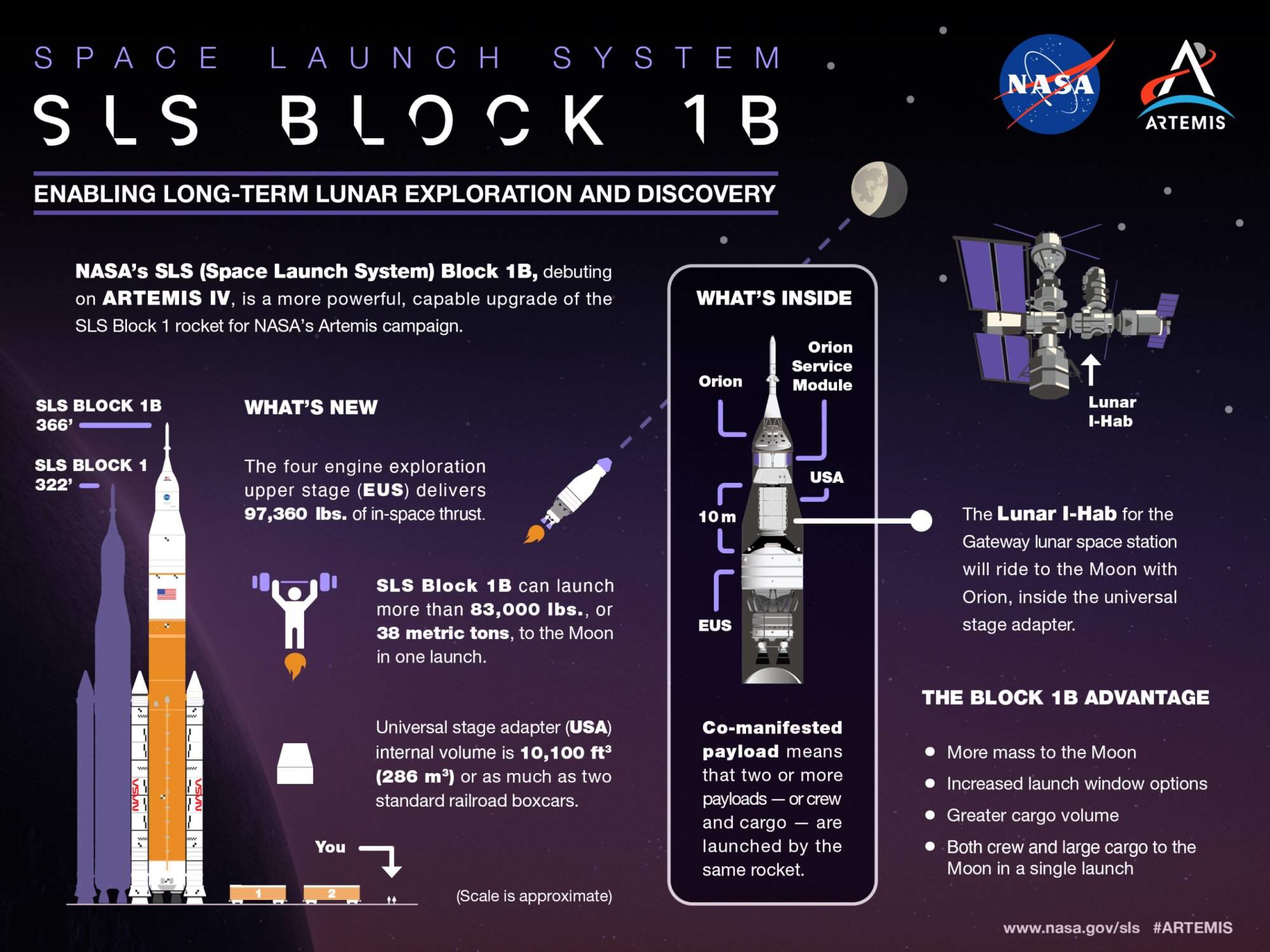
NASA Space Technology Lee BegJun 21, 2024NASA’s SLS (Space Launch System) rocket in the Block 1B cargo configuration will launch for the first time beginning with Artemis IV. This upgraded and more powerful SLS rocket will enable SLS to send over 38 metric tons (83,700 lbs.) to the Moon, including NASA’s Orion spacecraft and its crew, along with heavy payloads for more ambitious missions to deep space. While every SLS rocket retains the core stage, booster, and RS-25 engine designs, the Block 1B features a more powerful exploration upper stage with four RL10 engines for in-space propulsion and a new universal stage adapter for greater cargo capability and volume.As NASA and its Artemis partners aim to explore the Moon for scientific discovery and in preparation for future missions to Mars, the evolved Block 1B design...
Continue reading