Tag: What’s

  • What’s Included in the 596 Books Banned by the Department of Defense Education Activity?

    What’s Included in the 596 Books Banned by the Department of Defense Education Activity?

    Kelly is a former librarian and a long-time blogger at STACKED. She’s the editor/author of (DON’T) CALL ME CRAZY: 33 VOICES START THE CONVERSATION ABOUT MENTAL HEALTH and the editor/author of HERE WE ARE: FEMINISM FOR THE REAL WORLD. Her next book, BODY TALK, will publish in Fall 2020. Follow her on Instagram @heykellyjensen.

    View All posts by Kelly Jensen

    Find below more information about the ACLU’s lawsuit over book bans in DODEA schools from earlier this summer.


    For years, it’s been clear that one of the most vital ways through this era of book censorship is the legal system. The results of the ongoing spate of lawsuits are a mixed bag. We’ve seen Iowa’s “Don’t Say Gay” bill, which involves removal of any books from schools with so-called “sex acts” in them, be blocked and deemed unconstitutional. We’ve seen the Fifth Circuit Court say that library users have no First Amendment grounds to sue libraries for removal of books for any reason in Louisiana, Mississippi, and Texas. Librarian Brooky Parks successfully settled a lawsuit against her former public library employer, where she was terminated for speaking out against censorship; so, too, did Suzette Baker in Llano County.

    Keeping track of the number of lawsuits over library censorship right now is a nearly impossible task because there are so many. Among them are suits in Tennessee and South Carolina over bans in public school libraries and public libraries respectively; a lawsuit over the use of BookLooks/RatedBooks to select school library materials in Minnesota’s St. Francis Area Schools (a state where they have an anti-book ban law, remember); and a lawsuit over Idaho’s bill that requires public libraries relocate books parents complain about or face financial penalty.

    These don’t even touch on upwards of a dozen more, nor do they cover the two federal lawsuits happening over the dismantling of the Institute for Museum and Library Services (you can read a timeline of this ongoing situation, including all of the court actions on it, over here).

    Another lawsuit underway right now is one that has gotten less attention than some of the others, thanks in part to the censorship issue at play taking place outside of the “typical” public library and school environment. One of the first book ban directives of the current federal administration came through the Department of Defense Education Activity schools, which fall under the directive of the Department of Defense. This creates a more direct line for federal demands than your average public school or public library–the IMLS, for example, doesn’t set policies or procedures for public libraries in the country, as those are determined on the state and local level and thus, while the financial support for libraries can be yanked as we’re seeing now, that doesn’t (yet) translate to the agency’s leader being able to demand all books on certain topics be banned from public schools. The same goes with the Department of Education and public schools. There are a lot more hurdles to jump through from the top down than with the Department of Defense’s Education Activity schools.

    The American Civil Liberties Union (ACLU) filed a lawsuit against the administration for its book banning demands on those schools.

    Sam LaFrance, First Amendment Communications Strategist for the ACLU, gives background into the current book banning directive, which books are being targeted, what led the ACLU to pursue litigation, the current status of the case, and more.

    ***

    From Kentucky to Japan, something is going on in certain public schools: books are being taken off the shelf, posters of historical figures like Frida Kahlo are being removed from walls, and Black History Month celebrations are being cancelled.

    It’s all because the Department of Defense is implementing new policies banning books, classroom discussions, events, and extracurriculars that relate to race and gender in military-run schools on bases around the world.

    So the ACLU took them to court.

    What is DoDEA? Why are they banning books?

    The U.S. Department of Defense runs public schools on their military bases around the world for children of active-duty servicemembers and civilian military personnel. The agency that runs these schools is called the Department of Defense Education Activity (DoDEA), and it operates just like any other public school district — except that it is run by the federal government and therefore is under the direct control of the Secretary of Defense and the Commander in Chief, not a local school board. DoDEA serves over 67,000 students from kindergarten through high school in 161 schools across 11 countries, seven states, Guam, and Puerto Rico.

    If you compared DoDEA to more traditional school districts in the United States, it would be among the most diverse, and most high achieving, in the nation.

    But in January 2025, President Donald Trump signed three executive orders that impact DoDEA and how it operates:

    • Executive Order (EO) 14168 titled “Defending Women From Gender Ideology Extremism and Restoring Biological Truth to the Federal Government”;
    • EO 14185 titled “Restoring America’s Fighting Force”; and
    • EO 14190 titled “Ending Radical Indoctrination in K-12 Schooling”

    These executive orders prohibit, among other things, the use of federal funds for anything that may promote “gender ideology” or “divisive concepts,” the latter of which has long been interpreted to cover a wide array of topics related to race, sex, and American history. EO 14185 explicit instructs the military to stop “promoting, advancing or otherwise inculcating” several “un-American, divisive, discriminatory, radical, extremist, and irrational theories” — all of which implicate books and curricula that relate to race and gender, as we have seen in public schools around the country since 2021.

    In President Trump’s words, these concepts add up to “wokeness”:

    [W]e are getting wokeness out of our schools and out of our military and it’s already out and it’s out of our society, we don’t want it. Wokeness is trouble, wokeness is bad, it’s gone. It’s gone. And we feel so much better for it, don’t we? Don’t we feel better?

    What exactly are they doing?

    In February, DoDEA began implementing these new executive orders. In several emails to teachers and staff, administrators asked that they “ensure books potentially related to gender ideology or discriminatory equity ideology are removed from the student section” of the library. Parents were told that “books potentially related to gender ideology or discriminatory equity ideology topics” were to be relocated to a private section, away from students, for professional review. Teachers were asked to remove these books from their classrooms, and DoDEA told the press that they were taking steps to end “radical indoctrination” in school.

    Using keyword searches, materials were identified for potential noncompliance with the executive orders prohibiting so-called “gender ideology” and “divisive concepts.” That review is ongoing at DoDEA HQ – and their decision could impact students in schools from Kentucky to Japan. In DoDEA’s own words, all of this happened in response to President Trump’s executive orders and guidance from Secretary of Defense Pete Hegseth. The impact is already being felt.

    A training at a school in Germany, librarians were instructed to scan books for potential references to gender identity; one book,Both Sides Nowby Peyton Thomas, was flagged as in violation because it “refers to transgender.”

    A news outlet in Kentucky reported that librarians at Fort Campbell felt they needed to remove “any books that mention slavery, the civil rights movement or the treatment of Native Americans.” In that same school, an internal memo explicitly banned “monthly cultural observances” — resulting in bulletin boards about Black history being taken down, and the cancellation of similar plans for Asian American and Pacific Islander Heritage Month. In an official, DOD-wide memo from January titled “Identity Months Dead at DoD,” the agency instructed all schools to cancel any “special activities and non-instructional events” related to Black History Month, Women’s History Month, Pride Month, and more.

    Several books and resources were removed from the curriculum, including chapters of two AP Psychology books that discussed human sexuality and a historically accurate, grade-appropriate biography of Robert Cashier, a civil war veteran who was born female but enlisted and fought valiantly as a man in the Union Army.

    This censorship extended into sex education, too. Several chapters were banned from DoDEA sex ed textbooks, including:

    • “Communicable Diseases: Sexually Transmitted Diseases”;
    • “Unwanted Sexual Activity: Sexual Harassment”;
    • “Human Reproductive System, Menstrual Cycle, and Fetal Development”;
    • “Abuse and Neglect”; and
    • “Adolescence and Puberty”

    The agency left no stone unturned. Even school yearbooks were implicated: no “visual depictions, written content, or editorial choices” that may indicate support for “social transition” was allowed.

    All of this violates the First Amendment.

    Students in DoDEA schools, just like other students in American public schools, have a right to receive information about the world around them. They have a right to read books about their own experiences or the experiences of people that are different from them, and they have a right to have their education shaped not by animus or politics but by pedagogical expertise, curiosity, and educational rigor.

    What books were banned?

    According to a new filing from DoDEA, 555 books and 41 curricular materials have been banned on bases around the world while they undergo review. DoDEA doesn’t want to say what those books are, but we’ve compiled a list of some titles that appear to be included, and the court ordered a full list by mid-June.

    According to reporting from news outlets, plaintiffs, DoDEA itself, and other sources, these 233 books are alleged to have been quarantined or banned in DoDEA schools. Here is a selection:

    • Freckleface Strawberryby Julianne Moore
    • To Kill a Mockingbirdby Harper Lee
    • Julián Is a Mermaidby Jessica Love
    • 4 entries in theHeartstopperseries by Alice Oseman
    • I Kissed Shara Wheelerby Casey McQuiston
    • The Color Purpleby Alice Walker
    • The New Jim Crow: Mass Incarceration in the Age of Colorblindnessby Michelle Alexander
    • The Kite Runnerby Khaled Hosseini
    • The Nickel Boysby Colson Whitehead (andThe Dozier School for Boys: Forensics, Survivors, and a Painful Pastby Elizabeth A. Murray, about the school on which this novel was based).

    Despite pleas from parents, students, and advocates, DoDEA has thus far refused to confirm which 555 books are officially on the chopping block systemwide. But based on what we know, as with other school districts, the vast majority of books allegedly banned within DoDEA appear to be by or about women, LGBTQ people, and people of color.

    What is being done about it?

    The American Civil Liberties Union, along with the ACLU of Kentucky and the ACLU of Virginia, filed suit against DoDEA in March on behalf of six families with children in DoDEA schools. These families have children ranging from kindergarten to 11thgrade in schools around the world.

    The suit argues that these removals violate the First Amendment. As described in the initial complaint, the removals and bans are not based on “rational, age-appropriate, evidence-based concerns” but on politics and the President’s “anti-wokeness” agenda. This limits students’ ability to think cri tically, learn about themselves and their neighbors, and in the case of sex ed materials, even keep themselves safe from harm.

    On Tuesday, June 3, 2025, the ACLU argued in the Eastern District of Virginia that the court should grant an immediate preliminary injunction – restoring curriculum, putting books back on the shelf, and preventing DoDEA from continuing to enforce the executive orders that caused all of this. The court could issue a decision at any time and at the hearing, the court ordered DoDEA to share more information about the removed books within seven days.But the battle won’t just be won in the courtroom – student organizers in DoDEA schools have been leading walkouts in protest of these new policies, often risking disciplinary action, since January. In South Korea, 40 students participated in one such walkout, which included a flag folding ceremony and a student dressed as the Statue of Liberty. And military parents, like the ones bringing the lawsuit, have spoken out about how incongruous this spate of censorship is with their jobs: “We make sacrifices as a military family so that my husband can defend the Constitution and the rights and freedoms of all Americans,” said one such parent. “If our own rights and the rights of our children are at risk, we have a responsibility to speak out.”
  • What’s top of mind for voters ahead of election day

    What’s top of mind for voters ahead of election day

    Politics tamfitronics

    For many Canberrans it has been impossible to miss the upcoming territory election, now two weeks away.

    Politics tamfitronics Subscribe now for unlimited access.

    or signup to continue reading

    All articles from our website

    & app

    The digital version of

    Today’s

    Paper

    Breaking news alerts direct to your inbox

    Interactive Crosswords, Sudoku and Trivia

    All articles from the other

    in your area

    Politics tamfitronics Brittney Levinson

    Brittney is part of the federal political bureau, covering politics, the public service and economics. Brittney joined The Canberra Times in 2021 and was previously the property reporter. Got a news tip? Get in touch: brittney.levinson@canberratimes.com.au

    Brittney is part of the federal political bureau, covering politics, the public service and economics. Brittney joined The Canberra Times in 2021 and was previously the property reporter. Got a news tip? Get in touch: brittney.levinson@canberratimes.com.au

    Politics tamfitronics More from ACT Politics

    Politics tamfitronics Your morning news Newsletter

    DAILY

    Your morning news

    Today’s top stories curated by our news team. Also includes evening update.

  • What’s real? How CBC News verifies video and images

    What’s real? How CBC News verifies video and images

    Top Stories Tamfitronics

    News Editor’s Blog·EDITOR’S BLOG

    The CBC News promise of accuracy means we must work hard to verify the “who, what, where and when” of any content we didn’t capture ourselves.

    Authenticating legitimacy of photos and images we didn’t take ourselves is both challenging and crucial

    Brodie Fenlon · CBC News

    ·

    Top Stories Tamfitronics Flames whip across a street as a house burns.

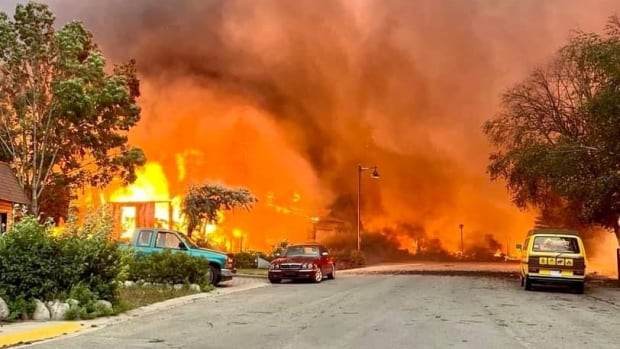
    In a time of growing disinformation, it is increasingly important for our teams at CBC News to verify the legitimacy of photos or video we didn’t capture ourselves. This picture of properties engulfed in flames at Cabin Creek Drive and Patricia Street in Jasper, Alta., on July 24 was one of the photos CBC staff verified after wildfire devastated the town. (Name withheld)

    We use this editor’s blog to explain our journalism and what’s happening at CBC News. You can find more blogs here.

    More than 600 newsrooms including ours at CBC will today mark World News Dayan annual global initiative to draw public attention to the role journalists and trustworthy news play in service to citizens and democracy.

    This year’s World News Day theme, “Choose Truth,” resonates at a time of growing disinformation, AI-generated deep fakes and when big technology platforms use algorithms to significantly shape, limit or exclude news from our feeds.

    There’s plenty of evidence that our information ecosystem is distorted, from an explosion of conspiracy theories such as the recent false claims of pet-eating refugees to the fact Canadians can’t share credible news on Facebook because of Meta’s rejection of the Online News Act. (Of note: more than a year has passed and still a surprising “super-majority” of Canadians don’t realize credible news has been banned from their Facebook and Instagram feeds, according to an online survey of 1,463 Canadians conducted in July.)

    And of course, we all live in a world where it’s easier than ever for people to use video and images to make something untrue seem real — including CBC News journalists who find their likeness used in ad scams.

    More and more, we see examples of audio, video and photos being misused or manipulated, often with artificial intelligence, influencing and shaping what people believe to be true.

    The need for consistency and quality around fact-checking and verification work is also growing, even as CBC works with international partners to make the origins of media more transparent through initiatives like Content Credentials.

    Top Stories Tamfitronics A mural shows the message

    A mural adorns a wall in the city of Springfield, Ohio. The city came under an unexpected firestorm, sparked by rumours online and in person. (Julio Cesar Chavez/Reuters)

    Journalism has always been about confirming the legitimacy of pictures and video, but it is increasingly important for our teams at CBC News to verify the “who, what, where and when” of any content we didn’t capture ourselves.

    Take, for example, the devastating wildfire that burned so much of Jasper, Alta., this summer.

    As the flames moved closer to the town, residents were evacuated and media kept away, leaving only essential emergency crews on the ground. Some of those people who stayed to work in the community posted photos and videos of the destruction.

    Journalistically, those images were of critical importance to the public’s understanding of the situation. They were the only indication many of us had to the extent of damage, while everyone else, including reporters, was forced to wait far away until the danger subsided.

    The posts also presented significant challenges for credible news organizations. Many of the people who took the photos and videos that circulated so quickly didn’t want others to know their identity given the work they were doing. There were many screenshots (and screenshots of screenshots). So tracing this important content back to its original source was not easy and, in many instances, impossible.

    The images also showed neighbourhoods in many parts of the town so badly destroyed they were almost unrecognizable, even to CBC employees who were very familiar with the town.

    Top Stories Tamfitronics Firefighters are pictured spraying structure during wildfires that entered Jasper, Alta.

    CBC staff verified this photo of firefighters in Jasper, Alta., on July 25. (Woodlands County/Facebook)

    None of that, though, diminished the extreme importance of giving all of our audiences — but especially residents of Jasper who had been forced to flee — a look at what had been damaged and what had not.

    So our teams got down to work, using tools such as Google Street View and archival footage to find clues confirming the images we were seeing were indeed from Jasper and, if so, to determine the exact location where they had been taken.

    In many cases, that meant looking at distinguishable landmarks within the rubble – like a distinctive decorative rock on a lawn or an identifiable metal fence – or comparing a photo from before the flames to what was left afterwards, such as a concrete front porch or brick chimney.

    We also used digital tools to evaluate whether there was any indication that the images had been artificially manipulated.

    It took time and effort. But it was essential work; our duty was to verify the legitimacy of anything we published or broadcast to be sure that we were giving our audiences a view of the aftermath that we knew to be true and accurate.

    The work of video and photo verification requires training and practice. Recognizing how crucial it is and will continue to be for all of our journalism, CBC News has developed and is now rolling out a new training program for our journalists. We are building the skills of people in newsrooms all across Canada who can quickly help verify visual content.

    We’re also establishing a dedicated news team focused on developing original and investigative storytelling using open-source information (e.g. satellite images, social media) and verification methods and tools.

    All of this is part of how CBC News fulfils the commitment to accuracy that’s central to our Journalistic Standards and Practicesso that our audiences can, in the words of today’s World News Day theme, “Choose Truth.”


    Speaking of trustworthy news, I’m pleased to report that CBC News has again been certified under the Journalism Trust Initiative (JTI), an international standard involving external audits designed to showcase and promote trustworthy journalism. Read more about the JTI at Reporters Without Borders.

    Top Stories Tamfitronics ABOUT THE AUTHOR

    Brodie Fenlon is general manager and editor in chief of CBC News.

    • What’s on your bookshelf?: QWOP, Getting Over It, and Ape Out’s Bennet Foddy

      What’s on your bookshelf?: QWOP, Getting Over It, and Ape Out’s Bennet Foddy

      Politics tamfitronics

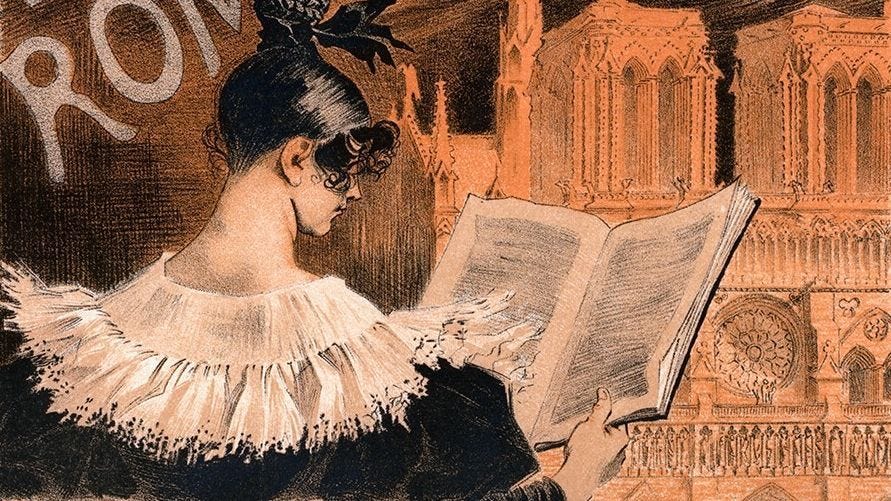
      Politics tamfitronics A lady reads a book in Eugène Grasset's Poster for the Librairie Romantique
      Image credit: oldbookillustrations.com

      Hello reader who is also a reader, and welcome back to Booked For The Week – our regular Sunday chat with a selection of cool industry folks about books! “What’s with the politics? Stick to games!” is a common refrain you might hear from the sort of winning individual who thinks books are a communist plot to lower their sperm count. Luckily, those people are elsewhere, so I hope you’ll allow me a brief moment of relief that the Tories are no longer in power. This is a great thing, providing you have absolutely no follow-up questions! This week, it’s QWOP, Getting Over Itand Ape Out‘s Bennet Foddy! Cheers Bennet! Mind if we have a nose at your bookshelf?

      What are you currently reading?

      First of all I have to admit I feel like a bit of a charlatan answering these questions because I didn’t read anything for years, burned out from a career in academic philosophy and too besotted with games and film to look elsewhere. But I’ve picked up the habit again over the last couple of years, and at the moment I’m picking at Mary Beard’s The Fires Of Vesuvius, a historical book about Pompeii that I got started on when I visited the ruins there recently. Friends may lampoon me for embodying the ’men thinking about the Roman Empire’ trope, but at least Mary Beard thinks about it more than I do.

      What did you last read?

      The Husbands, the debut novel by game designer and curator Holly Gramazio, who is also a friend of mine. It was wonderful – laugh-out-loud funny in places, but also really thoughtful and slyly philosophical. Just as Calvino’s Invisible Cities uses a series of imaginary and fantastical places to say something about the nature of real cities and societies, The Husbands circles gently around the nature of romantic commitment by sketching a series of husbands, as the protagonist gets new ones over and over.

      What are you eyeing up next?

      Next on the list is actually a graphic novel, Monica by Daniel Clowes. I was a huge fan of his Eightball series in the 90s, it was the thing that really turned me on to the idea that comic books could break with orthodoxy and go wild. Ghost World in particular is a favorite, maybe the 90s-est thing that anyone ever made. But it’s been so long since I’ve read anything of his… what’s happened to him in the past 25 years?

      What quote or scene from a book has stuck with you?

      Lately I was reading Evelyn Waugh’s Brideshead Revisited and I was haunted by the scene where the young protagonist visits his wealthy father to complain that he is short of funds, and his father deliberately misinterprets this as a request for a different kind of help:“Well, I’m the worst person to come to for advice. I’ve never been ‘short’ as you so painfully call it. And yet what else could you say? Hard up? Penurious? Distressed? Embarrassed? Stony-broke?” (Snuffle.) “On the rocks? In Queer Street? Let us say you are in Queer Street and leave it at that.”I’m not a parent, but still I do aspire toward this advanced level of trolling.

      What book do you find yourself bothering friends to read?

      For years I’ve been trying to get my game designer friends to read Ishiguro’s An Artist of The Floating World. A story about an artist who feels responsibility for his role in getting Japan into the second world war, it deals with the question of whether and how art can have power. Do artists delude themselves in thinking their work can be influential outside the artistic sphere? Or is it a worse delusion to think that it can’t? It feels eternally timely to me, but especially now, when people post memes that look like this:

      Politics tamfitronics A meme that Bennet Foddy sent me.
      Image credit: Reddit

      What book would you like to see someone adapt to a game?

      Honestly, I don’t tend to think that books adapt well into games (or vice versa). But I really loved Constellation Games by Leonard Richardson, a book in which aliens arrive on earth and the protagonist (a game designer, of course) asks to play their retro videogames so he can better understand their alien culture. Here on Earth I think we oftentimes need a special excuse to break the genre conventions that are cemented in the contemporary videogame canon, and adapting that book would be a chance to make a bunch of games that seem to come from an entirely different lineage. Any excuse would be a good excuse!

      Frustratingly, Bennet did actually name roughly 80% of all the books ever written, but insisted on piling them all up as they went. He’d just got to ‘L’ when the entire stack collapsed. We’re not starting again, so pop back next week for another cool industry person telling us about their favourites. Book for now!

    Our Portfolio

    Latest Questions

    Categories

    TAGS

    Contacts

    Miscellaneous

    Categories

    SWITCH CURRENCY