Tag: Galactic

  • Virgin Galactic seeks to raise money to accelerate growth of spaceplane fleet

    Virgin Galactic seeks to raise money to accelerate growth of spaceplane fleet

    Top Stories Tamfitronics

    Top Stories Tamfitronics VMS Eve
    VMS Eve, Virgin Galactic’s mothership aircraft used by its suborbital spaceplanes. The company is looking to raise $300 million that will mostly be used to develop a second mothership plane. Credit: Virgin Galactic

    WASHINGTON — Virgin Galactic is proposing to raise $300 million in additional capital to accelerate production of suborbital spaceplanes and a mothership aircraft the company says can fuel its long-term growth.

    In a Nov. 6 earnings call to discuss the suborbital spaceflight company’s third quarter financial results, Virgin Galactic executives said that while work on the first two Delta-class spaceplanes remains on budget and schedule, they see an opportunity to raise money to add vehicles to the fleet sooner that previously planned.

    “We have an exciting opportunity to captures economies of scale from our existing investments,” Michael Colglazier, chief executive of Virgin Galactic, said during the call of those plans.

    The company had planned to use revenue from operations of its first two Delta-class spaceplanes, the first of which will start flying commercially in 2026, to fund development of future vehicles. But the company now says it wants to raise money to speed up work on two more Delta-class vehicles and a second mothership, allowing them to enter commercial service in 2028, two years earlier than previously projected.

    “The growth capital we plan to employ will allow Virgin Galactic to deliver a second mothership and two additional spaceships much earlier than if we were to fund these ships solely through organic growth,” he said.

    A second pair of spaceplanes, along with a second mothership, would result in a “fully utilized” Spaceport America in New Mexico, said Doug Ahrens, chief financial officer of Virgin Galactic. That would double the revenue over a two-spaceplane facility but quadruple earnings before interest, taxes, depreciation and amortization (EBITDA) because fixed costs are spread over more flights.

    “From there, our first fully utilized spaceport becomes the economic engine that generates more than enough cash flow to expand to other spaceports around the globe,” he said, a plan the company discussed in its previous earnings call in August.

    Ahrens said the company needs to raise $300 million to accelerate work on the additional spaceplanes and mothership. He didn’t disclose a schedule for raising the money other than to say the company had “flexibility” on when to raise it based on its existing cash, which is sufficient to bring the first two Delta-class vehicles into service. Virgin previously stated that having two vehicles in service would generate positive cash flow for the company.

    Most of the additional capital would go towards development of a second mothership that will look similar to VMS Eve, the company’s current aircraft that has been used on SpaceShipTwo flights and will be used by the first two Delta-class vehicles. Virgin Galactic plans to begin design work on the plane in 2025, moving into production in 2026 and testing in 2027 before entering commercial service in 2028.

    The company will build that plane internally, taking advantage of an engineering and production workforce that will be moving off work developing the Delta-class spaceplanes. Virgin Galactic previously contracted with Aurora Flight Sciences, a Boeing subsidiary, to produce new motherships, but that agreement fell apart and led to dueling lawsuits by Boeing and Virgin.

    Virgin later dropped its suit against Boeing, electing to instead defend Boeing’s suit. According to Virgin’s Nov. 6 10-Q filing with the Securities and Exchange Commission, the companies finalized a settlement agreement Oct. 31 and Boeing’s suit was dismissed Nov. 4. The filing did not mention terms of the agreement and Virgin executives did not mention it in the earnings call.

    Colglazier said that work on the first Delta-class vehicles is going well, with subcontractors Bell Textron and Qarbon Aerospace making progress on tooling and parts for the vehicles. Assembly of the first Delta-class vehicle remains on schedule to begin in the first quarter of 2025 at the company’s new facility near Phoenix, with rollout and ground tests slated for the second half of 2025.

    He hinted at some issues in the development of some components that required design revisions by Virgin, working with Bell and Qarbon. “Together, we’ve been able to resequence elements within our build planning to maintain overall program momentum and delivery within our expected timelines.”

    Virgin reported revenue of $402,000 in the third quarter and a net loss of $74.5 million. The company ended the quarter with $744 million of cash and equivalents on hand.

    Jeff Foust writes about space policy, commercial space, and related topics for SpaceNews.He earned a Ph.D. in planetary sciences from the Massachusetts Institute of Technology and a bachelor’s degree with honors in geophysics and planetary science…More by Jeff Foust
  • Galactic penguin honors the 2nd anniversary of James Webb Space Telescope’s 1st images

    Galactic penguin honors the 2nd anniversary of James Webb Space Telescope’s 1st images

    NASA Space Technology

    To celebrate two years since the James Webb Space Telescope (JWST) started sending images back to Earth, NASA has released yet another stunning image taken by the revolutionary space telescope.

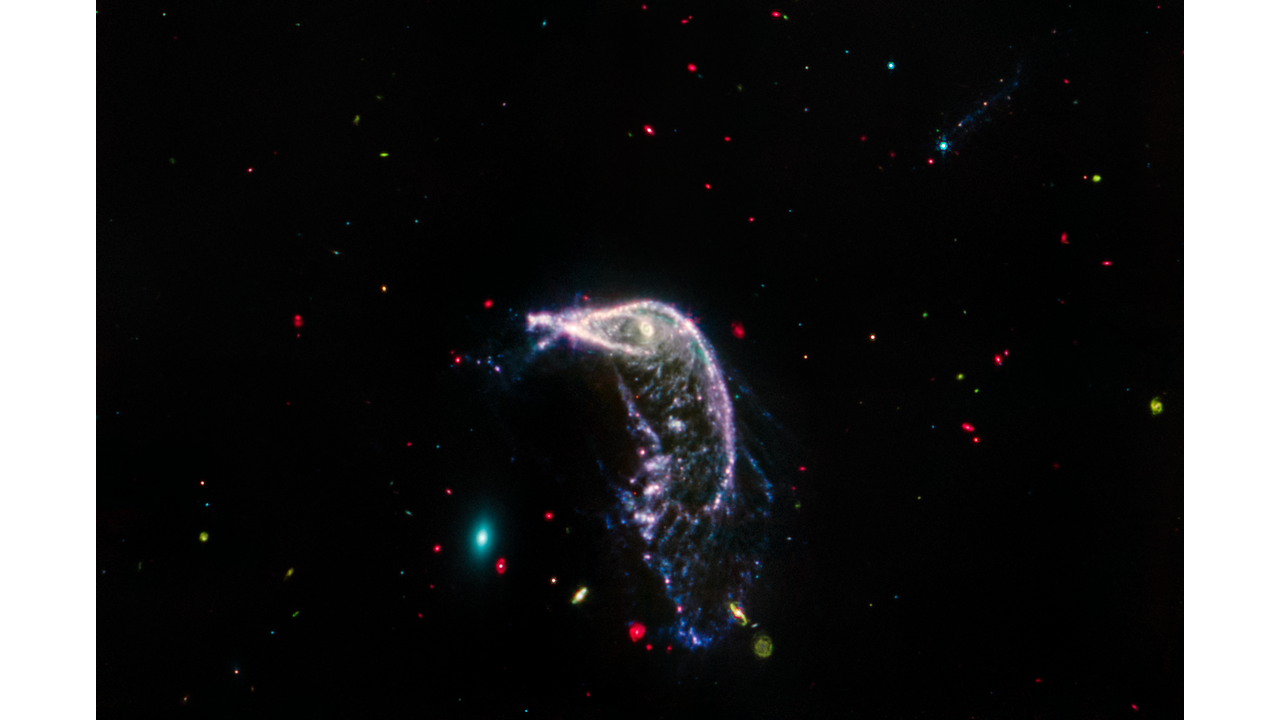
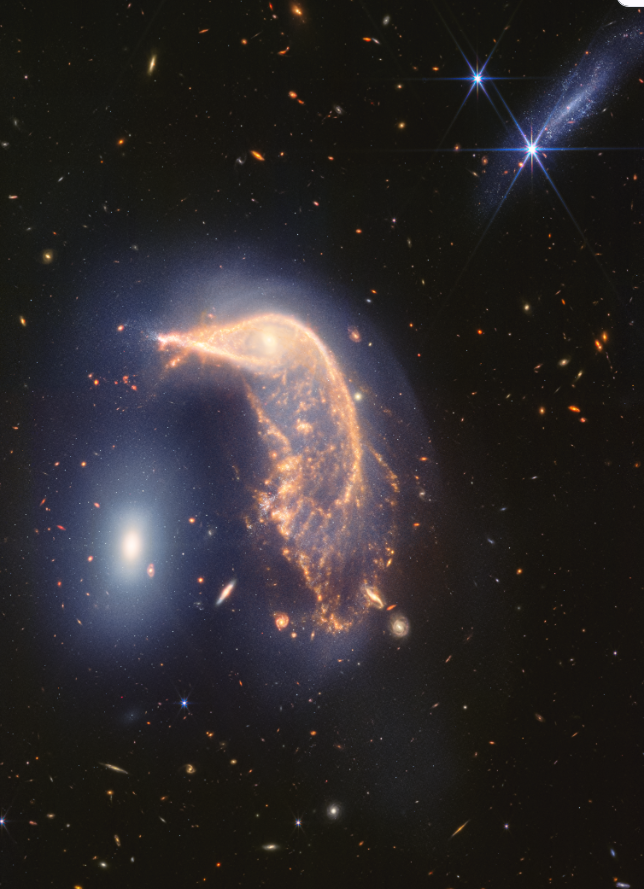
    The second-anniversary JWST image shows two interacting galaxies that make up a single object called Arp 142, which appears like a cosmic penguin with its cosmic egg. Fittingly for a celebration of the JWST’s two years of science results, the new image is a two-for-two. Arp 142’s Penguin and Egg scene comprises two interacting galaxies located around 326 million light-years from Earth in the constellation of Hydra. It has been observed before, but never in as much detail as this view from the JWST has allowed.

    Related: James Webb Space Telescope sees an ancient black hole dance with colliding galaxies

    NASA Space Technology A dark background of space has a shining galaxy view in front of it, sort of shaped like a penguin. There's a glowing white orb toward the bottom right, representing the

    The distorted spiral galaxy at center, the Penguin, and the compact elliptical at left, the Egg, are locked in an active embrace. This near- and mid-infrared image combines data from NASA’s James Webb Space Telescope’s NIRCam (Near-Infrared Camera) and MIRI (Mid-Infrared Instrument), and marks the telescope’s second year of science. (Image credit: NASA, ESA, CSA, STScI)

    “In just two years, the JWST has transformed our view of the universe, enabling the kind of world-class science that drove NASA to make this mission a reality,” Mark Clampin, director of the Astrophysics Division at NASA Headquarters in Washington said in a statement. “The JWST is providing insights into longstanding mysteries about the early universe and ushering in a new era of studying distant worlds, while returning images that inspire people around the world and posing exciting new questions to answer.

    “It has never been more possible to explore every facet of the universe.”

    Galaxies throw a party for the JWST

    In the new image, Arp 142 is seen in infrared light by the JWST’s Near-Infrared Camera (NIRCam) and Mid-Infrared Instrument (MIRI); the “penguin” is a misshapen spiral galaxy called NGC 2936, while its “egg” is the galaxy NGC 2937. The two galaxies are separated by around 100,000 light-years, which is actually quite close in galactic terms. For example, the Milky Way galaxy and the Andromeda Galaxyits nearest neighbor, are around 2.5 million light-years apart

    The Arp 142 interaction began between 25 million and 75 million years ago, when the two galaxies first swept past each other, disrupting the spiral shape of NGC 2936. As the interaction continues, further golden threads will be pulled from this cosmic penguin until the galaxies finally collide and merge.

    Breaking space news, the latest updates on rocket launches, skywatching events and more!

    Within the penguin part of this duo, NGC 2936’s galactic center gleams in the cosmic waterfowl’s head as a bright shining eye. The unwinding arms of gas, dust, and stars of NGC 2936 form the penguin’s beak, head, back and fanned-out tail.

    Like most spiral galaxiesNGC 2936 is rich in gas and dust, which is being pulled on by the egg half of the situation, NGC 2937. This causes regions of increased gas density in NGC 2936 that cause bursts of star formation. These regions can be seen in the beak, feathers and tail of the Penguin in the JWST image.

    The new stars are surrounded by orange, smoke-like gas containing carbon-based molecules called polycyclic aromatic hydrocarbons (PAHs)which the JWST has become adept at seeing. While the Penguin tells a story of disruption and upheaval, the galaxy that represents its egg is relatively undisturbed. NGC 2937 is an elliptical galaxy that is packed with older stars than those of NGC 2936. This galaxy consists of less gas and dust than its companion, which means the interaction isn’t triggering the same bouts of intense star formation.

    The fact that the Penguin and its egg are relatively the same mass has prevented one galaxy from simply devouring the other.

    Birthday party tricks

    Of course, NASA couldn’t throw a party for the JWST if only two galaxies rolled up.

    The galaxy PGC 1237172 is at the top right of the Penguin and Egg image. The blue swoop is an edge-on view of this young galaxy, which is packed with blue infant stars and is just 100 million light-years from Earth.

    NASA Space Technology Red, blue, and yellow speckles dot the background of space. The Penguin and Egg galaxy are seen in the middle, with a different color scheme than the header.

    A mid-infrared view of interacting galaxies Arp 142 from the JWST’s MIRI instrument (Image credit: NASA, ESA, CSA, STScI)

    PGC 1237172 also performs quite a neat party trick for the JWST. The blue edge-on galaxy disappears when the same region is seen in mid-infrared by MIRI (above).

    Sorry to spoil the illusion. This happens because MIRI is better at seeing mid-infrared light from older stars and dust, with this galaxy’s copious young stars vanishing in those wavelengths of light.

    Making up the rest of the party are a multitude of other distant galaxies — some are semi-hidden within the tail feathers of NGC 2936, while others shine faintly in the background.

    Two years of the JWST

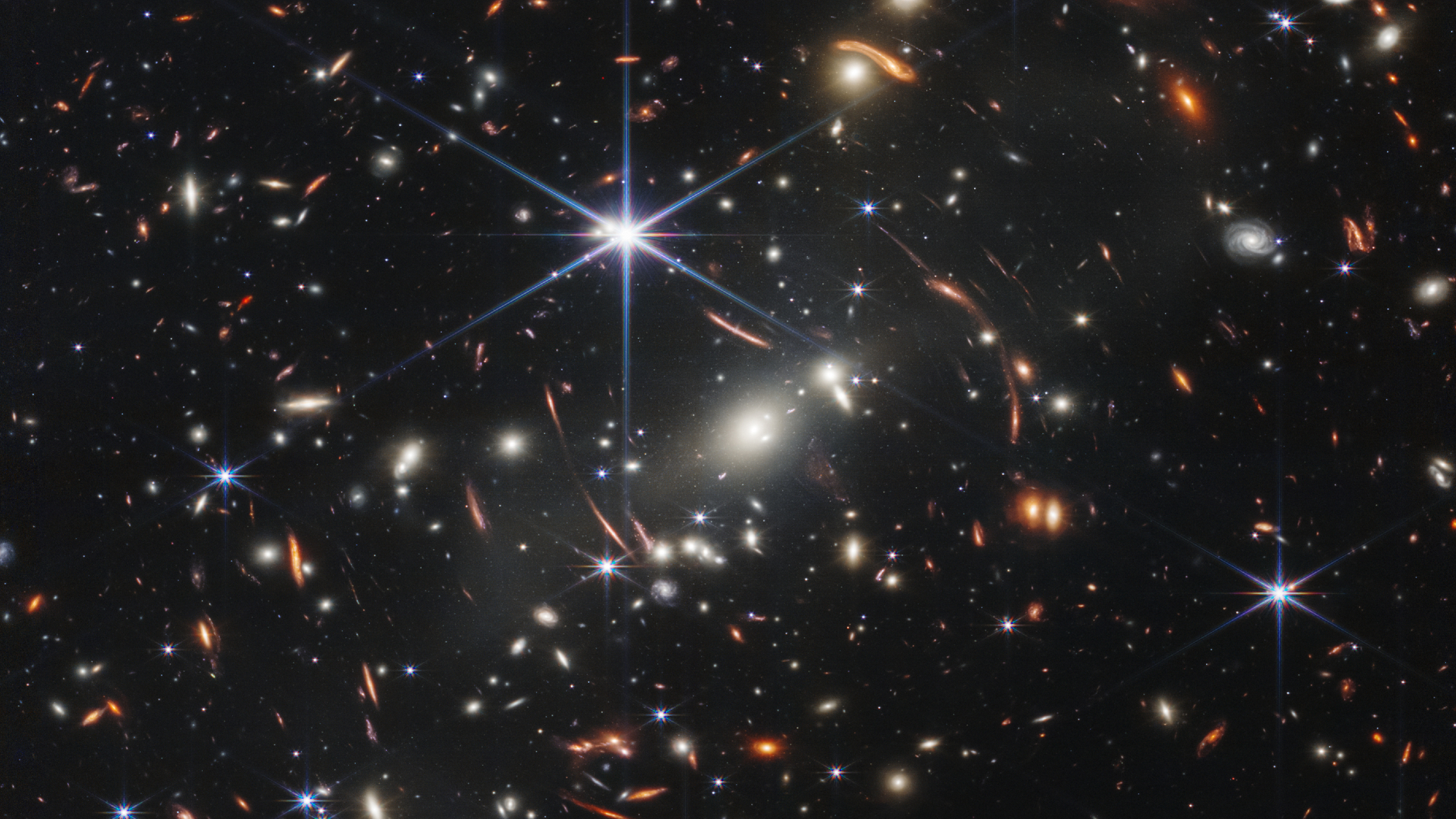
    The JWST launched on Christmas Day in 2021but spent the first few months in space calibrating its instruments as it prepared to observe the cosmos in infrared light. On July 11, 2022, President Biden and Vice President Harris revealed the first image from the $10 billion telescope in a press conference from the White House.

    This image featured the galaxy cluster SMACS 0723 and became known as the JWST’s First Deep-Field image.

    NASA Space Technology A dark background of space with smears of galaxies strewn throughout.

    This James Webb Space Telescope deep-field image shows some of the earliest and most distant galaxies ever seen. (Image credit: NASA, ESA, CSA and STScI)

    This reveal was followed a day later by a live NASA broadcast, which revealed three more stunning images from the JWST — the event marked by this new image release.

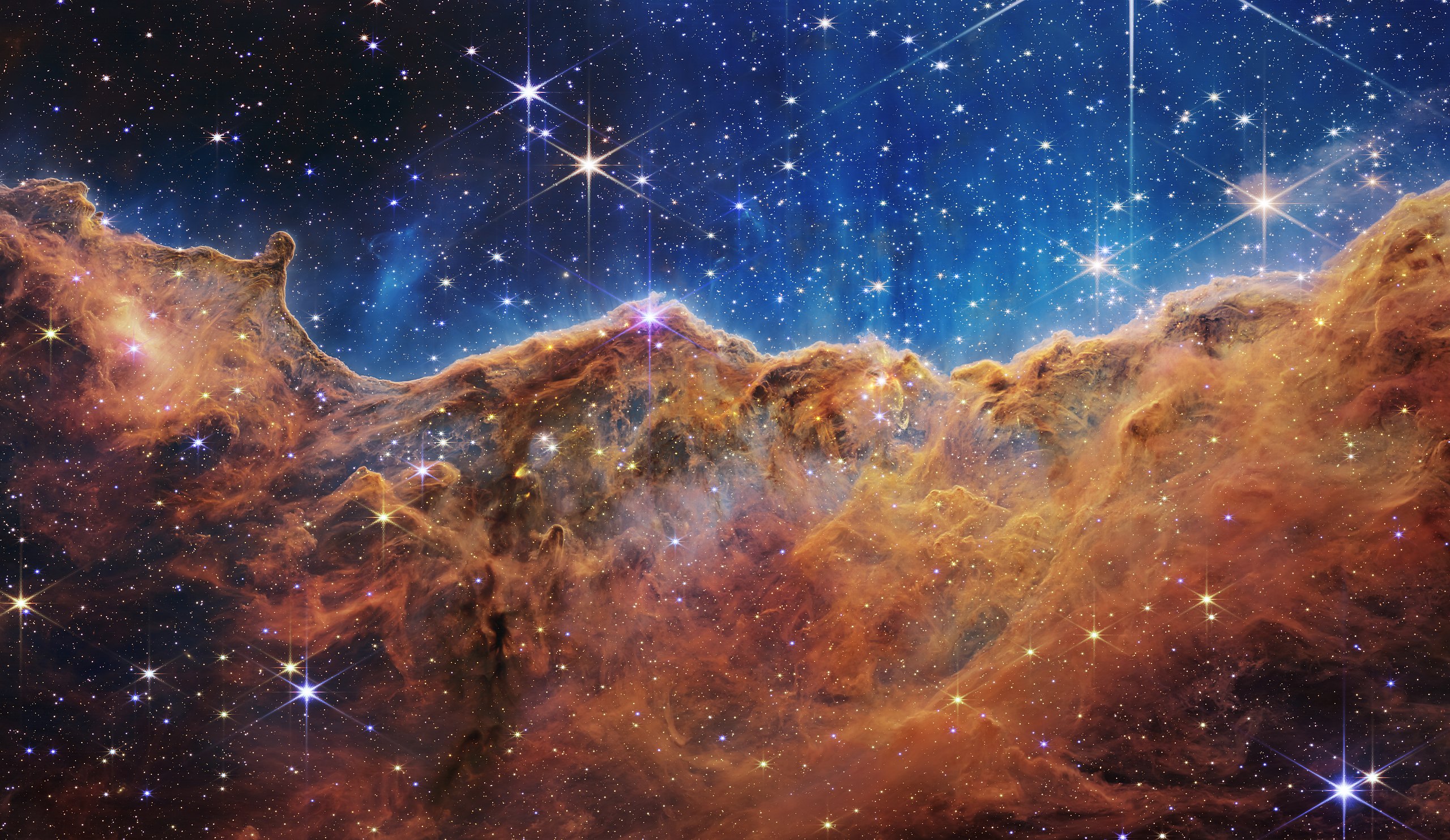
    The pictured objects shown to the public on July 12, 2022, included Stephan’s Quintetthe cosmic cliffs of the Carina Nebula and some supernova wreckage left behind by a dying star. These images were accompanied by data collected by the JWST from the atmosphere of the hot gas giant exoplanet WASP-96 b.

    NASA Space Technology There could be a planetary heist going on in the star-forming region NGC 3324 in the Carina Nebula.

    The Carina Nebula as seen by the JWST in an image released on July 12, 2022 (Image credit: NASA/James Webb Telescope)

    In the two years since then, the JWST has continued to deliver images of staggering beauty while also providing scientists with data that has revolutionized our understanding of the cosmos.

    The JWST has spotted the most distant galaxies ever seen by humanitysome of which are so distant they existed when the 13.8 billion-year-old cosmos was just 300 million years old. The most powerful space telescope ever has also observed quasars powered by supermassive black holes that existed less than 1 billion years after the Big Bang. This has actually provided cosmologists with a massive problem in explaining how these titans grew so massive so quickly in the infant universe.

    NASA Space Technology On the left, a blue, marble-like Jupiter shines against a dark background. A boxout on the right zooms in on its Great Red Spot.

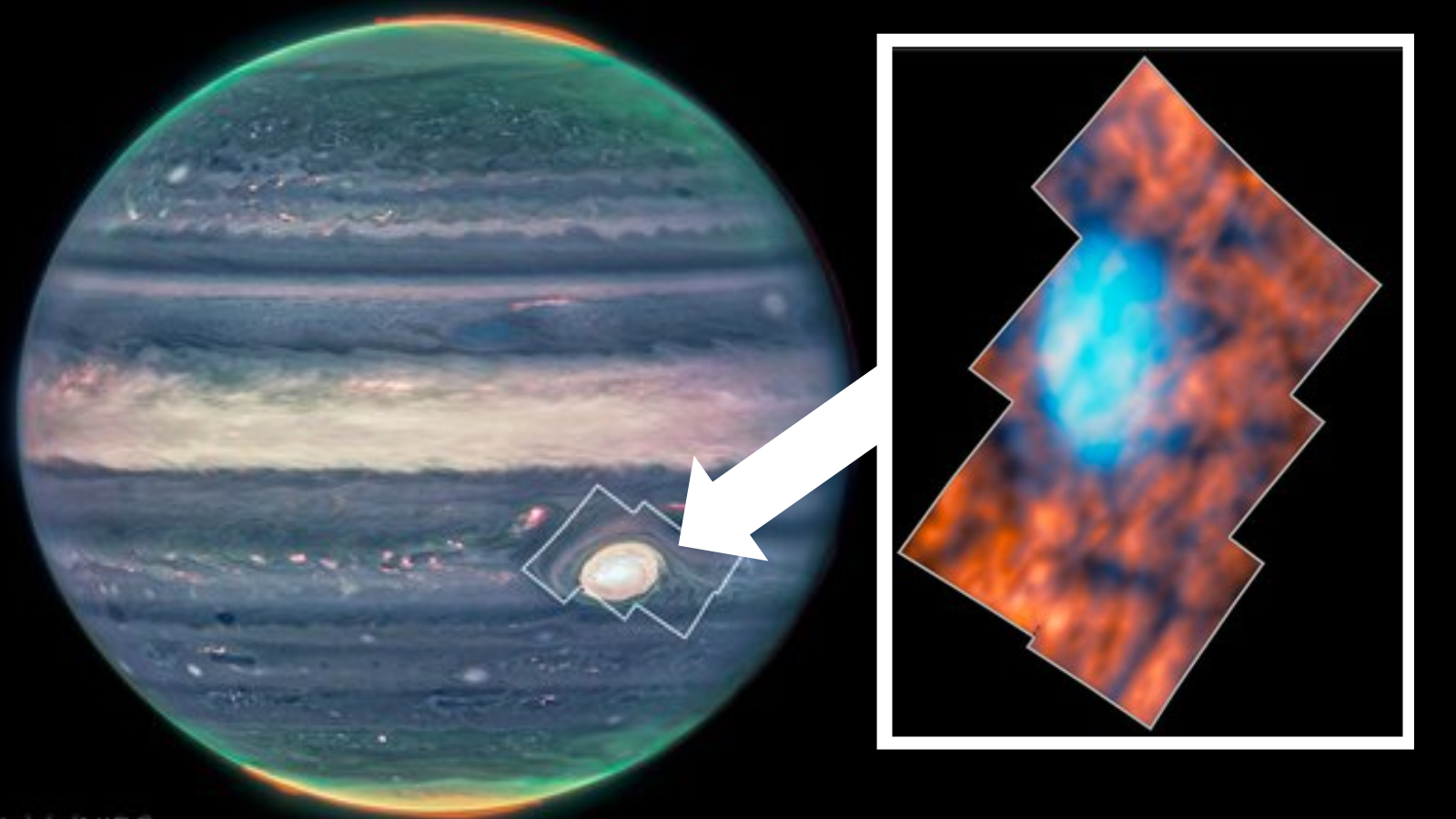
    (Right) Jupiter as seen by the JWST (Left) a close up of the Great Red Spot, the solar system’s largest storm. (Image credit: ESA/Webb, NASA & CSA, Jupiter ERS Team, J. Schmidt, H. Melin, M. Zamani)

    The JWST is adept at spotting light from galaxies that has had its wavelengths “stretched” by the expansion of the universe as the light spent billions of years traveling the cosmos. That’s why the telescope is so good at seeing early galaxies and quasars.

    Astronomers didn’t expect the space telescope to be so useful much closer to home, however, particularly in our solar system. That was just a nice surprise. Rather than being blinded by close objects, as astronomers feared it may be, the powerful space telescope has been able to image familiar solar system bodies like Jupiter (seen above) in an incredible new light.

    “Since President Biden and Vice President Harris unveiled the first image from the James Webb Space Telescope two years ago, Webb has continued to unlock the mysteries of the universe,” NASA Administrator Bill Nelson said in the statement. “With remarkable images from the corners of the cosmos, going back nearly to the beginning of timethe JWST’s capabilities are shedding new light on our celestial surroundings and inspiring future generations of scientists, astronomers, and explorers.”

    Join our Space Forums to keep talking space on the latest missions, night sky and more! And if you have a news tip, correction or comment, let us know at: community@space.com.

    Robert Lea is a science journalist in the U.K. whose articles have been published in Physics World, New Scientist, Astronomy Magazine, All About Space, Newsweek and ZME Science. He also writes about science communication for Elsevier and the European Journal of Physics. Rob holds a bachelor of science degree in physics and astronomy from the U.K.’s Open University. Follow him on Twitter @sciencef1rst.

Our Portfolio

Latest Questions

Categories

TAGS

Contacts

Miscellaneous

Categories

SWITCH CURRENCY